

As the seasons change, and the days get shorter, we often get asked, “Why doesn’t Vision Zero promote reflectors and lights for pedestrians and cyclists? It seems like everyone wears dark rain coats and they can’t be seen!”
I wish the vest I was wearing had kept me safe when I was hit by a car last January.
If you’ve met some of us in person, you would know that many of us choose to wear high-vis vests while cycling. I have a rechargeable wrist strap and a fully lit vest I use for evening runs. Lights and reflectors are legally required for bikes and e bikes in BC.
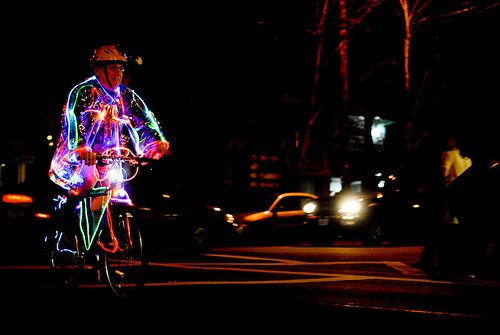
We would never discourage you from wearing reflectors. You may want to consider clothing with built‑in reflective panels so they aren’t forgotten. Unfortunately, reflectors are likely to have only a marginal effect on pedestrian safety and cannot substitute for Vision Zero measures.
Looking at Canadian statistics, only 21% of pedestrian fatalities at night involved the pedestrian wearing dark clothing. A study in Vancouver reported that over half of pedestrian collisions took place during daylight hours. In some tests of automated emergency braking systems, reflective striping on test dummies actually resulted in poorer performance, leading to more collisions between the vehicle and the test dummy. Those findings show visibility is not the primary driver of fatal pedestrian crashes.
From a Vision Zero perspective, we are aiming for “safety by design”. Some examples of what this could look like in our cities are:
- Protected bike lanes and pedestrian spaces
- Reduce speeds on our streets via traffic calming
- Curb extensions, daylighting intersections and leading pedestrian intervals
- Automated speed and red light enforcement via intersection cameras
- Prioritize redesign of high-injury corridors
These changes should be effective whether it’s daylight or nighttime, for people inside or outside of vehicles. This methodology focuses on the design of our transportation systems, rather than the errors or choices of individual drivers or pedestrians.
Framing safety as a matter of individual responsibility risks victim blaming. The reality is that people make mistakes, cars have mechanical failures, drivers have medical emergencies – a robust road safety system should be able to absorb these and reduce the chances of a fatality.
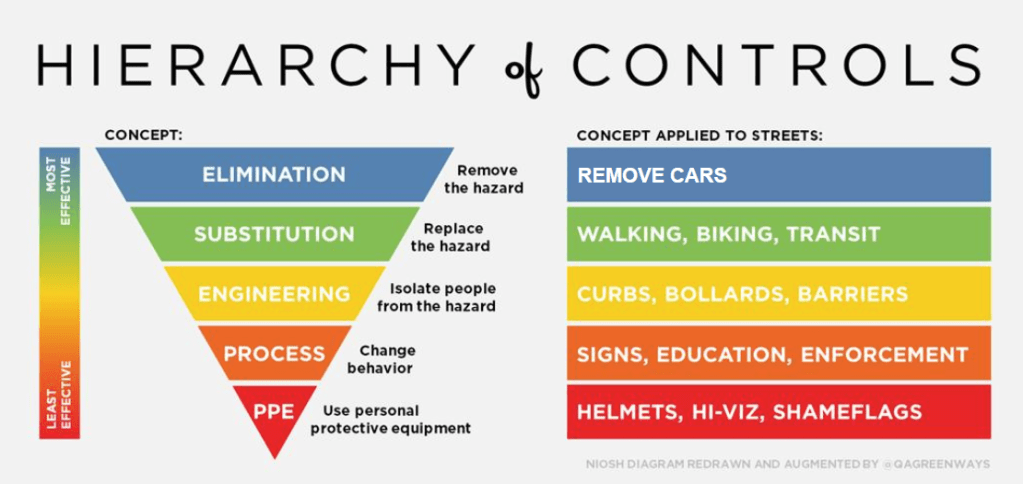
Personal protective equipment is the least effective layer of protection in the hierarchy of controls – by the time you need it, you’re already in danger. A reflector may help you feel safer but will never replace streets designed to prevent deadly errors.
— Written by Vision Zero Volunteer Michelle
 Vision Zero Vancouver
