
On December 10 2025, Vancouver City Council will vote on a motion brought by Councillor Lucy Maloney to restrict right turn on red at the highest risk intersections for people who walk, bike and roll in the city.
Specifically, the motion asks staff to take action to ban right turns on red at the following locations:
- where drivers turn through a bike lane
- where drivers turn through a leading pedestrian interval (where the pedestrian walk signal turns on before the green light)
- at intersections with high pedestrian and cyclist collision rates
While we think right turn on red should be banned by default, that would require action by the Province. Councillor Maloney’s common-sense motion instead proposes immediate action to tackle some of Vancouver’s busiest and most dangerous cyclist and pedestrian intersections.
Why are right turns on red dangerous?
Road safety experts widely agree that right turns on red increase crashes, especially for cyclists and pedestrians.
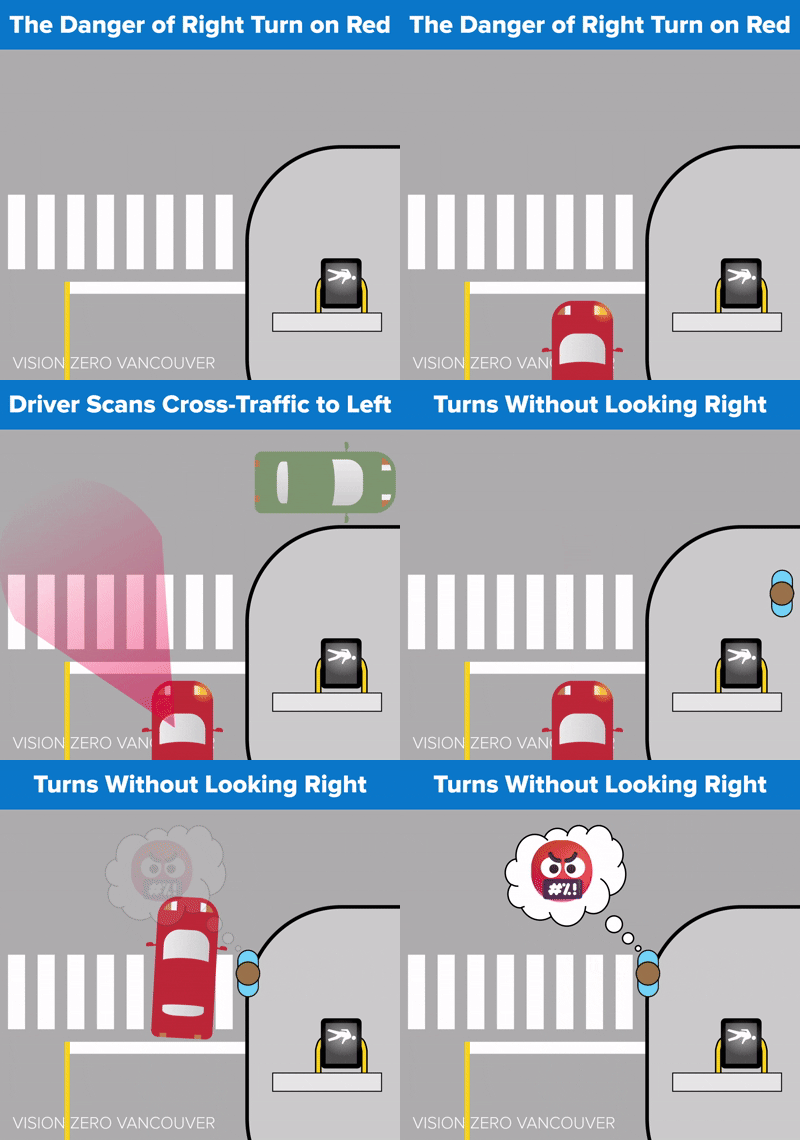
This is because it increases conflict, meaning that two road users are allowed to enter the intersection at the same time and would collide if one of them doesn’t yield to the other. A right turn on red also involves high cognitive load, as a driver who is busy looking left to scan for cross-traffic might be too distracted to shoulder check on their right for cyclists and pedestrians.
A study cited by the B.C. Ministry of Transportation found that right turn on red increases all crashes during right turns by 23%, pedestrian collisions by 60% and cyclist collisions by 100%. In fact, the Province’s official road safety toolkit says that banning right turn on red “strongly reduces the likelihood of conflict” and is an effective example of safe intersection design.
A 2015 Toronto study found that right-turning cars hit 1,235 pedestrians who had the right of way in a 4-year period. The study also found that right-turning cars hitting pedestrians and cyclists who had the right of way made up 12% of all road injuries in the entire City of Toronto!
A 2012 study commissioned by the City of Vancouver found that right-turning cars were the second-biggest cause of pedestrian collisions in the city, and recommended banning right turn on red at high-risk intersections.
Why ban it near bike lanes?

In short: to improve compliance with yielding rules that drivers are already required to follow.
The City of Vancouver already installs signs at virtually all signalized intersections where a bike lane crosses a right-turn lane that require drivers to yield to cyclists. Yet, as anyone who bikes in Vancouver will tell you, drivers don’t see the signs and will turn anyways. This is no surprise: evidence shows that drivers comply much less with yield signs than with red lights.
To eliminate this conflict, we must ban right turns on red at locations where cars cut off bike lanes and greenways. In Washington, DC, after right turn on red bans were implemented at key intersections in 2018, the number of failure to yield incidents fell by 92 percent.
What is a Leading Pedestrian Interval?
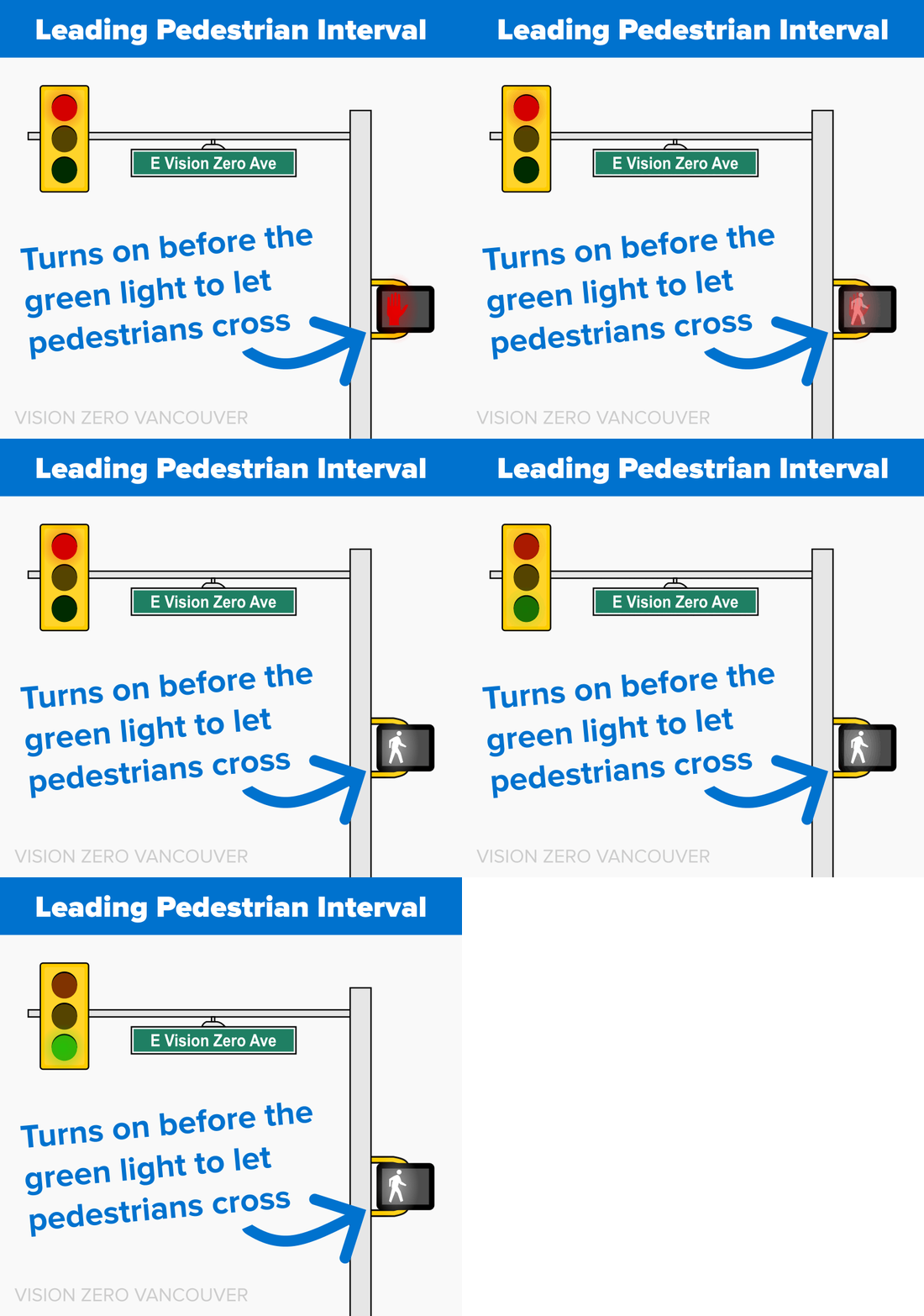
In dozens of places across Vancouver, the city has implemented leading pedestrian intervals (LPIs). A LPI turns the pedestrian walk signal on a few seconds before light goes green, so that pedestrians can cross the street ahead of turning cars.
This reinforces pedestrians’ right of way and makes them more visible to drivers. A 2025 study suggests that this can reduce the number of pedestrian injuries at intersections by one-third.
Allowing right turns on red defeats the point of a leading pedestrian interval. If a line of cars is already turning when the pedestrian walk sign turns on, how can pedestrians take advantage of it? That’s why both the B.C. Ministry of Transportation and the U.S. Department of Transportation identify banning right turn on red as a complementary treatment when a LPI is implemented.
What places are doing this?
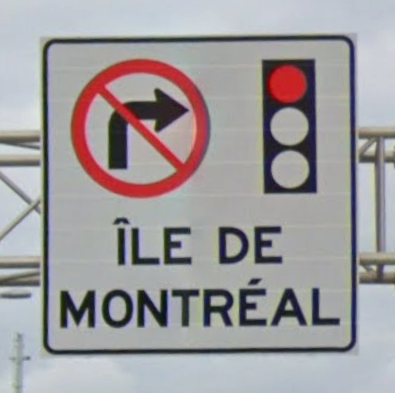

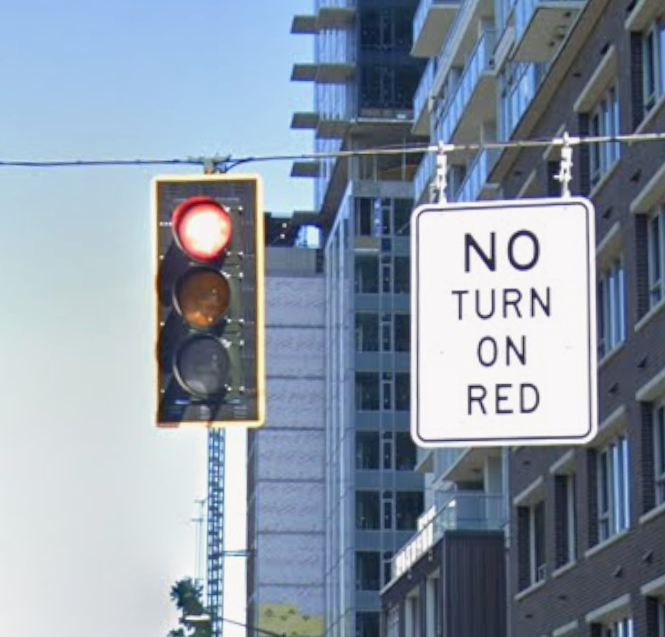

Right turns on red have always been banned by default at all intersections in Montreal and New York City. In 2024, Washington, DC became North America’s third major city to join them after a pilot showed huge declines in right of way violations and collisions. In most of the rest of the world, right turn on red is simply not a thing at all.
In Seattle, the city has required all new and upgraded intersections since 2023 to ban right turn on red. In the City of North Vancouver, council unanimously endorsed a plan to expand the number of no right turn on red intersections in 2023.
Here in Vancouver, the city’s Cyclist Safety Report and Transportation 2040 strategic vision both endorse banning right turn on red at more intersections. While newly rebuilt intersections like King Edward & Arbutus are often equipped with right turn on red bans, we believe it would be incredibly cheap and beneficial to safety if the city expands this treatment at all high-risk intersections. That’s what Councillor Maloney’s motion calls for.
Take Action to Support the Motion
Councillor Maloney’s motion is coming to Vancouver City Council on Wednesday, December 10.
While we think this is a common-sense move supported by overwhelming evidence, we’ve heard pushback from the Vancouver Police Department who claim that there’s not enough local evidence backing it—despite city studies, city policy, provincial guidelines and decades of evidence in North America all concluding that restricting right-turn-on-red saves lives.
We need your help. Tell Mayor and Council that you stand for safe streets, protecting cyclists & pedestrians, and evidence-based policy.
Copy and paste these emails into the ‘To’ field:
Ken.Sim@vancouver.ca,
CLRbligh@vancouver.ca,
CLRdominato@vancouver.ca,
CLRfry@vancouver.ca,
CLRkirby-yung@vancouver.ca,
CLRklassen@vancouver.ca,
CLRmaloney@vancouver.ca,
CLRmeiszner@vancouver.ca,
CLRmontague@vancouver.ca,
CLRorr@vancouver.ca,
CLRzhou@vancouver.ca
Writing to council with your own personal experiences is always best! But if you’d like, you can also use this text:
Dear Mayor and Council,
I support Councillor Lucy Maloney’s common-sense motion to expand right turn on red restrictions at high-risk intersections for cyclists and pedestrians.
This motion simply makes sure that our designs meant to protect vulnerable road users are working as intended: allowing cars to cut off pedestrians defeats the point of a leading pedestrian interval, while creating conflict between cars and bicycles on Vancouver’s protected bike network goes against the ethos of all-ages-and-abilities cycling.
I hope that you will heed the call of leading road safety experts and vote for this cheap and effective measure that will save lives at minimal cost to the city.
More Information About Speaking to Council
- Click the box for “Motion 4. Improve public safety for everyone in Vancouver through safer intersections” and then click Support
- Choose whether you prefer to go in person or call in by phone. Hit “Next” at the bottom of the page.
- You should receive an email confirmation with more information. This might include your speaker number, instructions for calling in, and how many minutes you will have to speak.
- Follow along during the meeting to watch for the relevant agenda item. If the motion is further down on the list, you may want to check in every so often to track progress and wait to call in. Sometimes councils can take a few hours up to a whole meeting just to discuss an agenda item. You can follow the City Clerk on Twitter where updates get posted about the day’s schedule.
- When the motion comes up, be prepared to call in. You’ll probably want to call in at least 3-5 speakers ahead of you. Once you’re connected, you’ll usually be able to hear the live meeting discussion on your phone, so remember to mute your computer audio if you have been watching along. Your phone line will remain muted until it’s your turn, so listen carefully. Usually someone will say your name or say your speaker number, and then they’ll unmute you and it’s your turn!
- Speak on the motion. Begin by telling them your name, whether you live in Vancouver, and that you support the motion. You only have three minutes.
- Councillors may have questions for you. If they do, you’re not required to answer them. Once you’ve completed your turn, simply hang up.
- Follow the City of Vancouver – Follow the city clerk on Twitter, and then turn on notifications for when they post. It’s a great way to keep up with what speaker number / issue they’re on. After the meeting is over, you can just turn off the notifications again.
 Vision Zero Vancouver