
A 6-block stretch of Hastings in the DTES is the most dangerous area for pedestrians in all of BC.
East Hastings Street is not safe
The stretch of Hastings between Abbott and Jackson is the heart of the downtown eastside. This area has many well-documented challenges. Thousands of people are on the street each day walking, sitting, eating, gathering, and sleeping. Most rely on social services, and struggle with mental health or addiction challenges.
Despite its challenges, this street contains densely populated community of people who all deserve to live in dignity, peace, and safety. Sadly, the road doesn’t allow this. When it comes to drivers hitting pedestrians, this short stretch of Hastings is the most dangerous in the entire province. ICBC crash data shows this clearly:
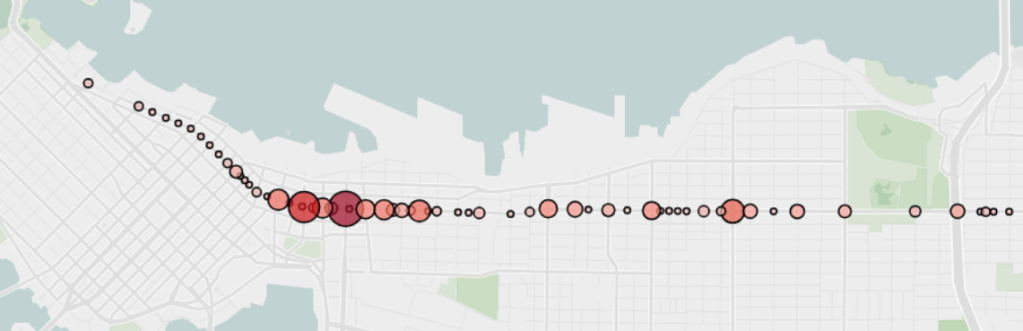
There have been over 100 pedestrian collisions reported to ICBC in these 6 blocks over the past 5 years, which is only a fraction of total incidents as many are never reported. Several have been fatal.
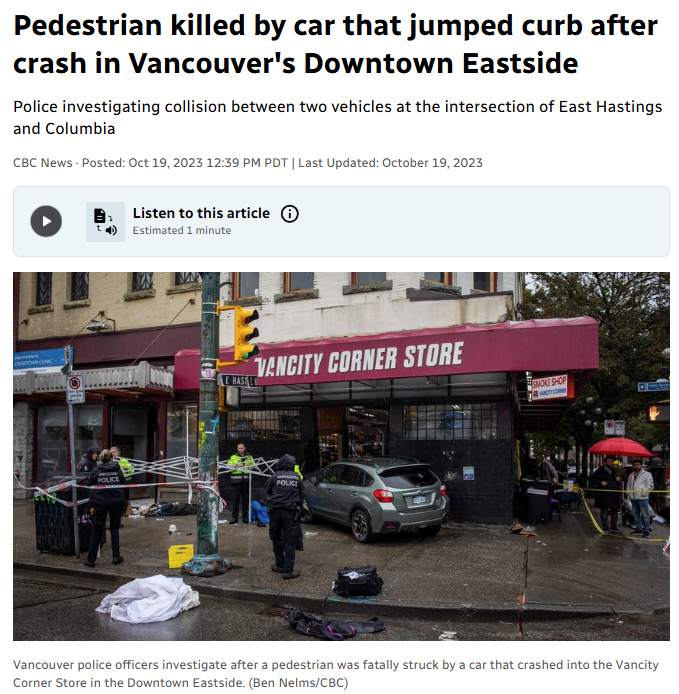
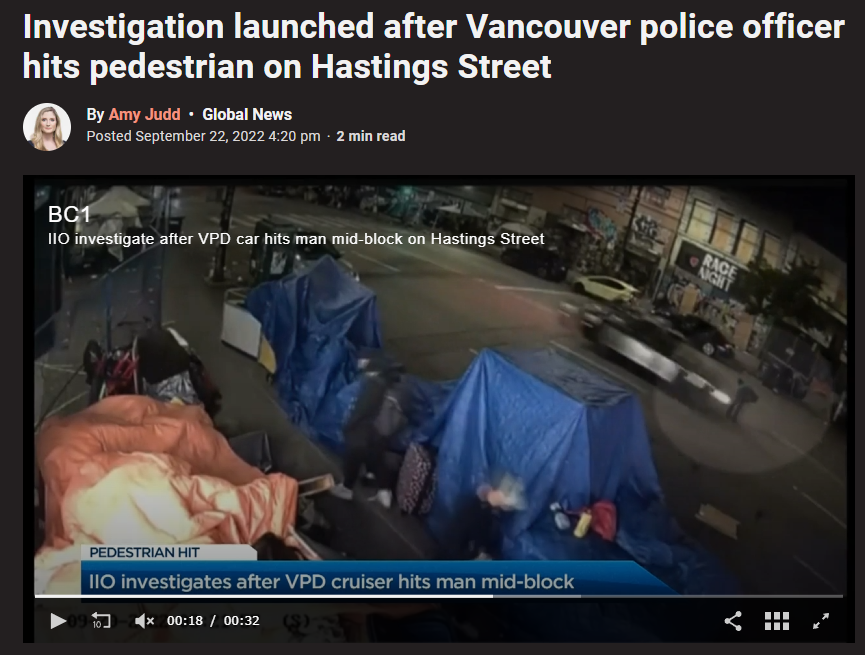
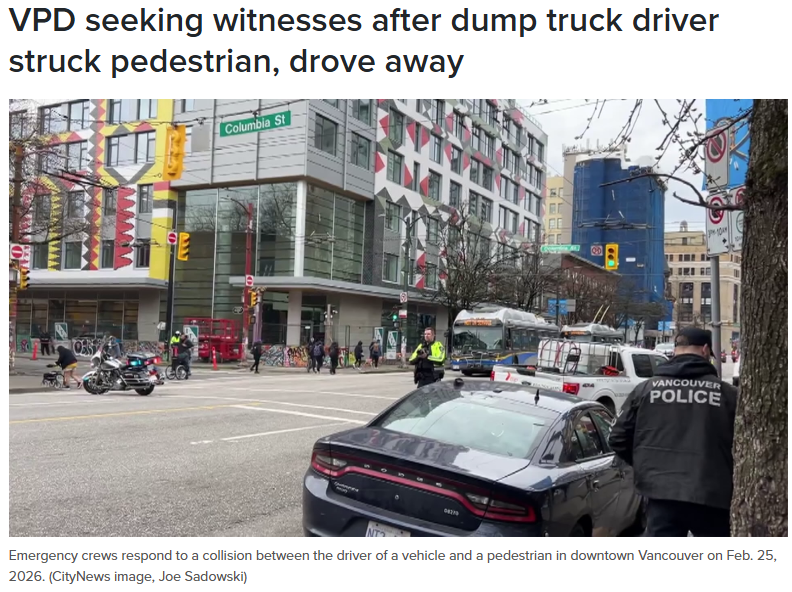
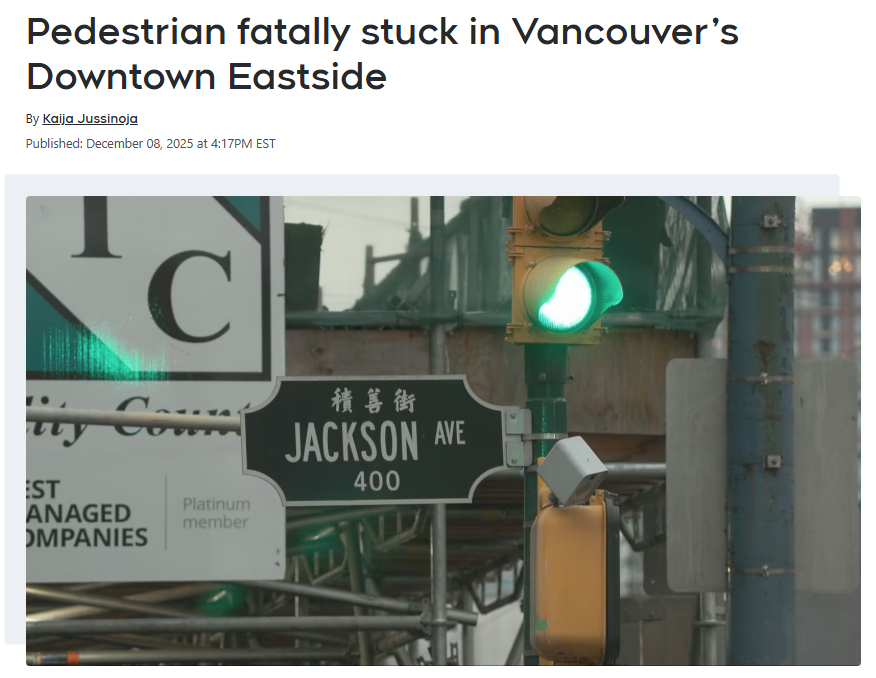
The community-led research project “We’re All Pedestrians“, a collaboration between the City of Vancouver, Vancouver Coastal Health, and VANDU back in 2010, interviewed more than 1,400 people in the neighbourhood and found a full 32% had been hit by a motor vehicle in the DTES before.
This issue isn’t new, but it’s also not inevitable.
The current design
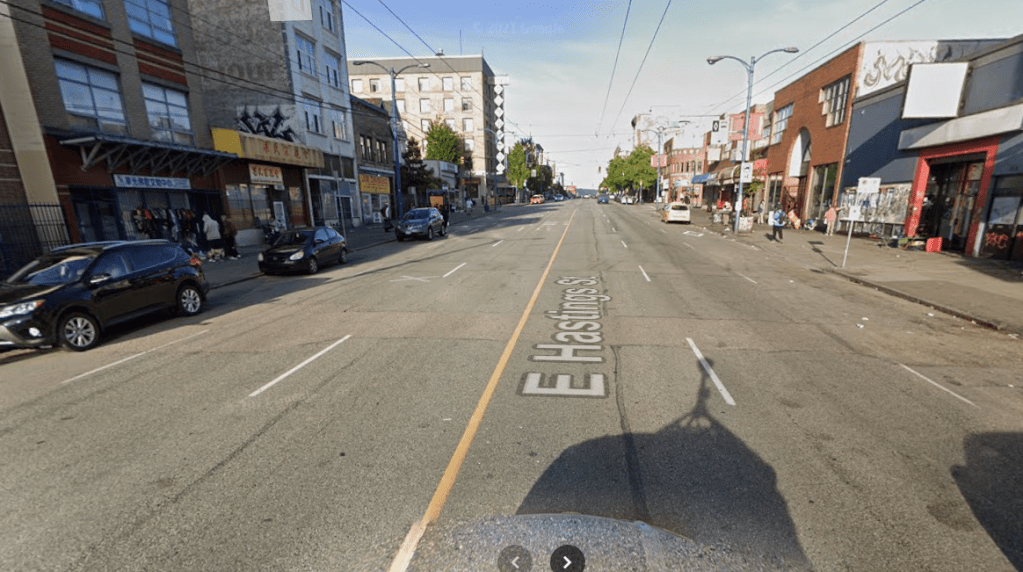
E Hastings is 6 lanes wide, with the curbside lanes alternately used as travel lanes, parking, and peak-hour bus lanes. It has relatively narrow sidewalks with no separation between sidewalk and street.
In 2011, the City of Vancouver responded to the alarmingly high rate of pedestrians crashes by reducing the speed limit on these 6 blocks to 30km/h. Unfortunately, they did this only using signage, and as we saw first hand, most drivers continued to drive the way the road design suggests: fast.
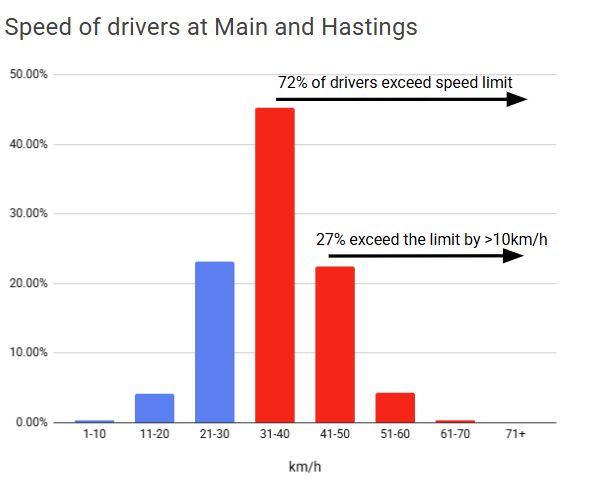
The city collected their own speed data, and it matches what we saw: 72% of drivers drive faster than the 30km/h speed limit, and 27% go more than 10 km/h faster.
Imagining better
We urge the City to do better on Hastings, to protect everyone who walks, gathers, and lives on this street. We strongly recommend the following modifications:
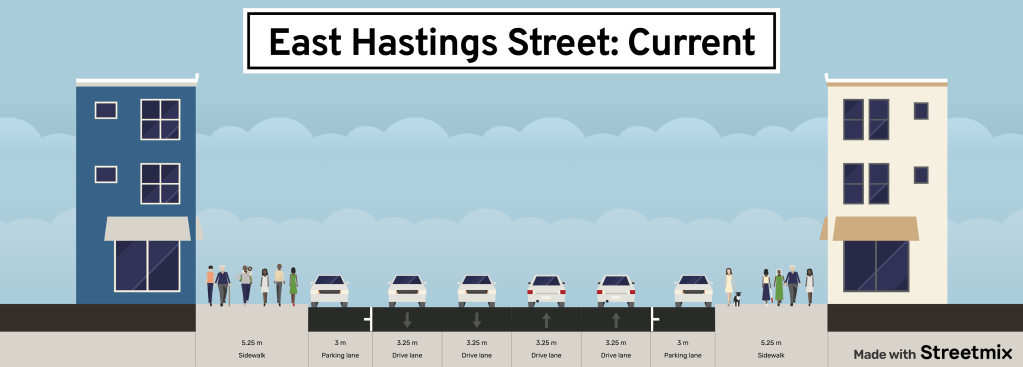
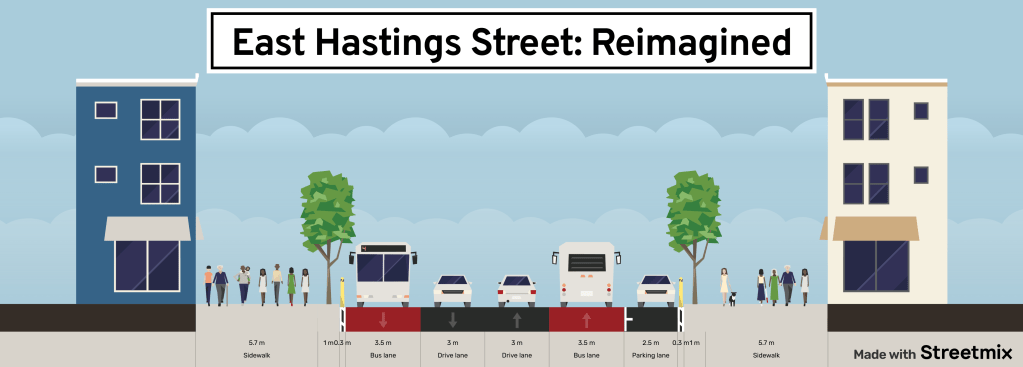
1) Remove 2 vehicle lanes, and expand the sidewalks.
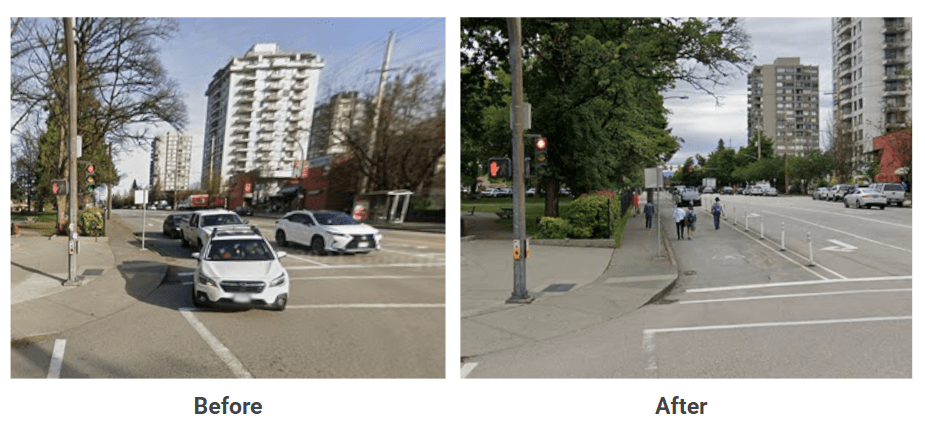
Hastings does not need to be 6 lanes through the DTES. Almost all truck traffic turns off at Clark, well east of this area. Converting 1 lane to all-day parking / loading zone / emergency vehicle pull-in use and removing another lane all together would allow for sidewalks to be extended an extra 1.5 meters, providing more room for people. A narrow road will also elicit slower driving. This is the most expensive part of the proposal, but in the interim, very cheap quick-build solutions exist such as this sidewalk expansion in New Westminster:
2) All-day bus lanes.
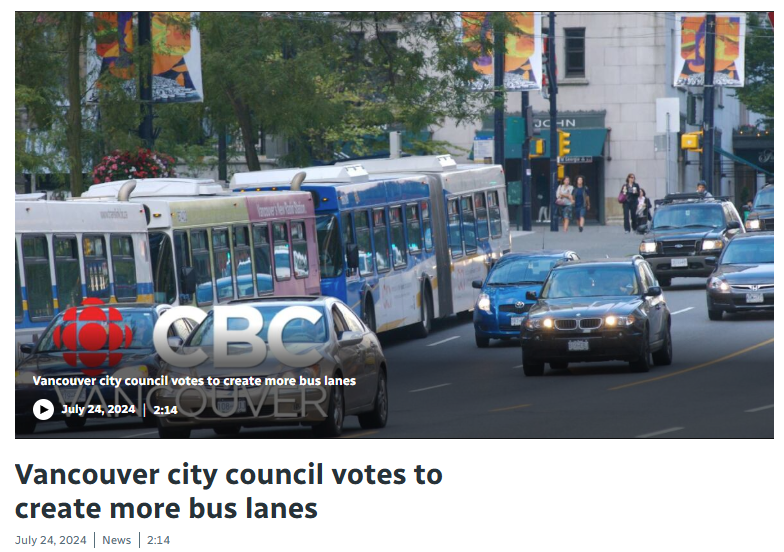
A challenge with reducing vehicle lanes on Hastings is that it’s part of Metro Vancouver’s “Major Road Network,” which means it needs to maintain a high level of person-moving capacity. Luckily, there’s a solution to this in the form of bus lanes, which move more than 3X the number of people per hour than conventional travel lanes. And great news, council already passed a motion for bus lanes on Hastings. Implementing these would actually increase the travel capacity of Hastings, even with a full travel lane removed.
3) Protect the street with trees and bollards.
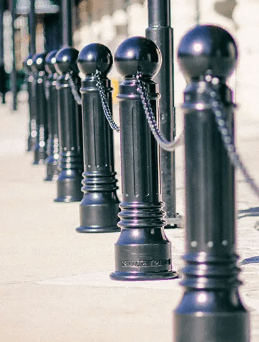
We’ve seen many instances where crashes on the road result in a vehicle propelled onto the sidewalk. Since the Hastings sidewalks are so densely populated, this carries heightened risk. Indeed, someone sitting on the sidewalk was recently killed by exactly such an incident. Bollards and trees long the sidewalk will protect pedestrians from this. More trees will also help with the huge canopy deficit in the DTES, and provide much-needed cooling and noise buffer.
4) Automated speed enforcement.
Although the City’s 2011 speed reduction is good, and narrowing the street will help, actual compliance will only come with proper enforcement. There’s a constant police presence in this area but people still speed; it’s clear that automated enforcement is needed. Interestingly, there’s already a speed camera at Hastings and Main. However this camera only gives out ~4 tickets per day (ICBC data), and our analysis indicates that this almost certainly means it’s set to a speed threshold of 70km/h, or 40km/h higher than the speed limit.

Let’s get this done.
While this is an ambitious project, it’s well worth it. Lives will be save, and hundreds of injuries will be prevented. The population on East Hastings is already among the most vulnerable in our city, and they deserve better. We call on TransLink, the Province, and above all the City of Vancouver to work together and deliver this vision.
 Vision Zero Vancouver