
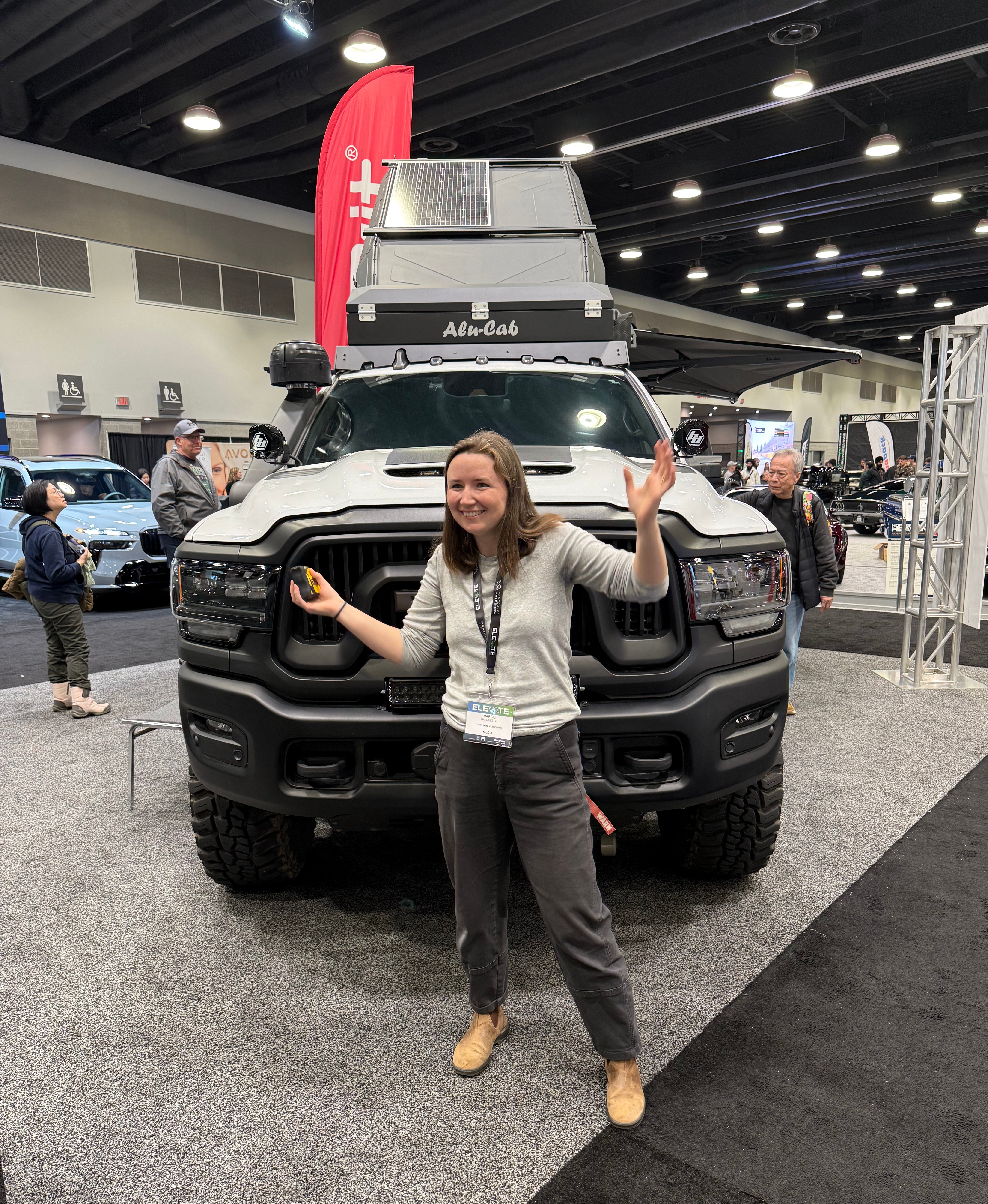
On a whim one day in January I applied for a press pass to the Vancouver International Auto Show. As a road safety advocate I thought of this like entering the belly of the beast to show up to this gigantic celebration of car culture, something that I think is actively harming society.
When the day finally came in March, I was pretty nervous. I planned for it to be one part infiltrating enemy territory, one part bridge building. I was hoping to ask some tough questions and lightly make fun of the whole event, but I was also genuinely curious to talk to car enthusiasts about road safety. While yes, I’m personally kind of a car hater, I also believe that prioritizing road safety will have big benefits for all road users, so I was interested to see what kinds of interventions or improvements were on the minds of people who think primarily about cars.
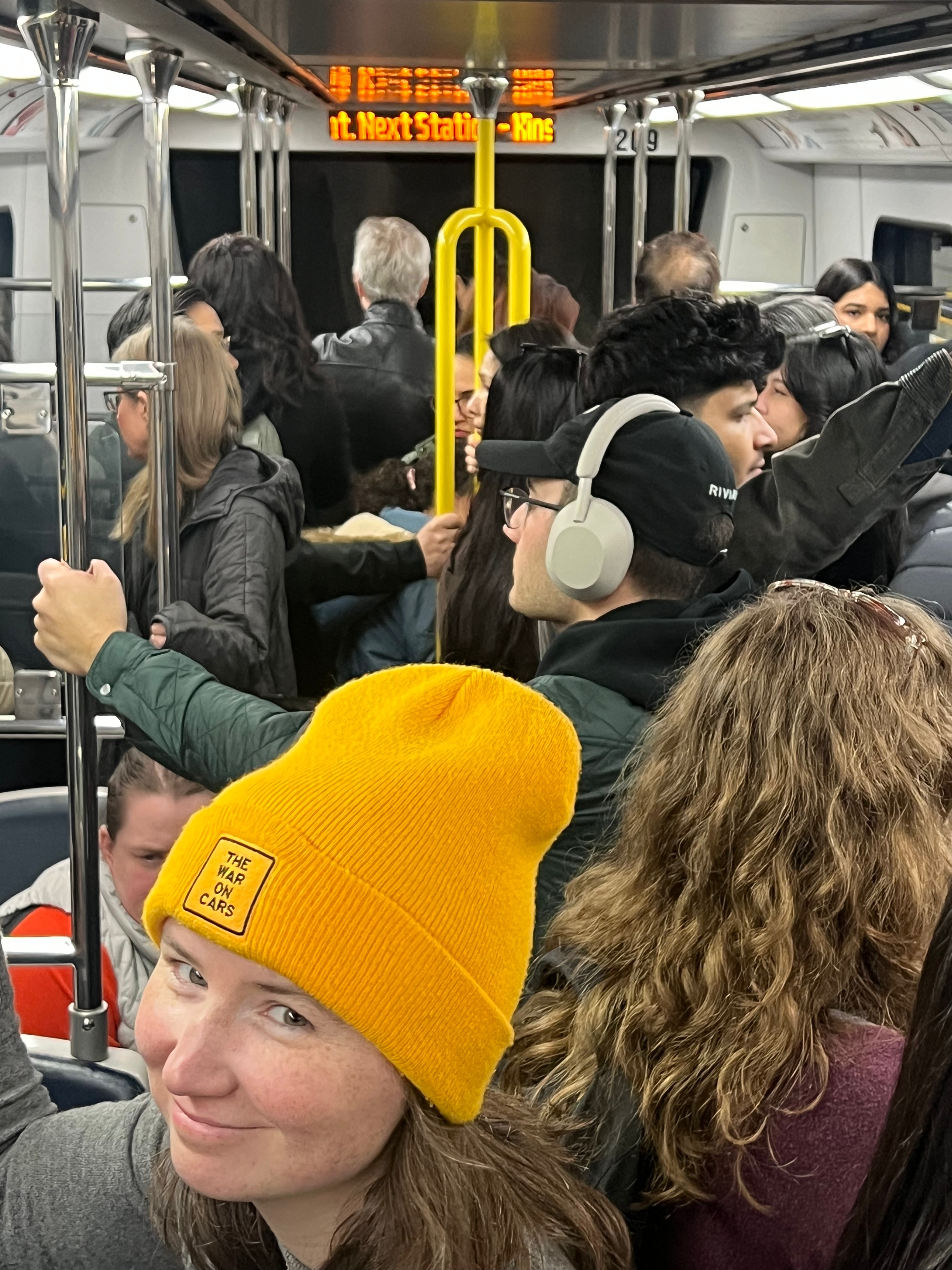
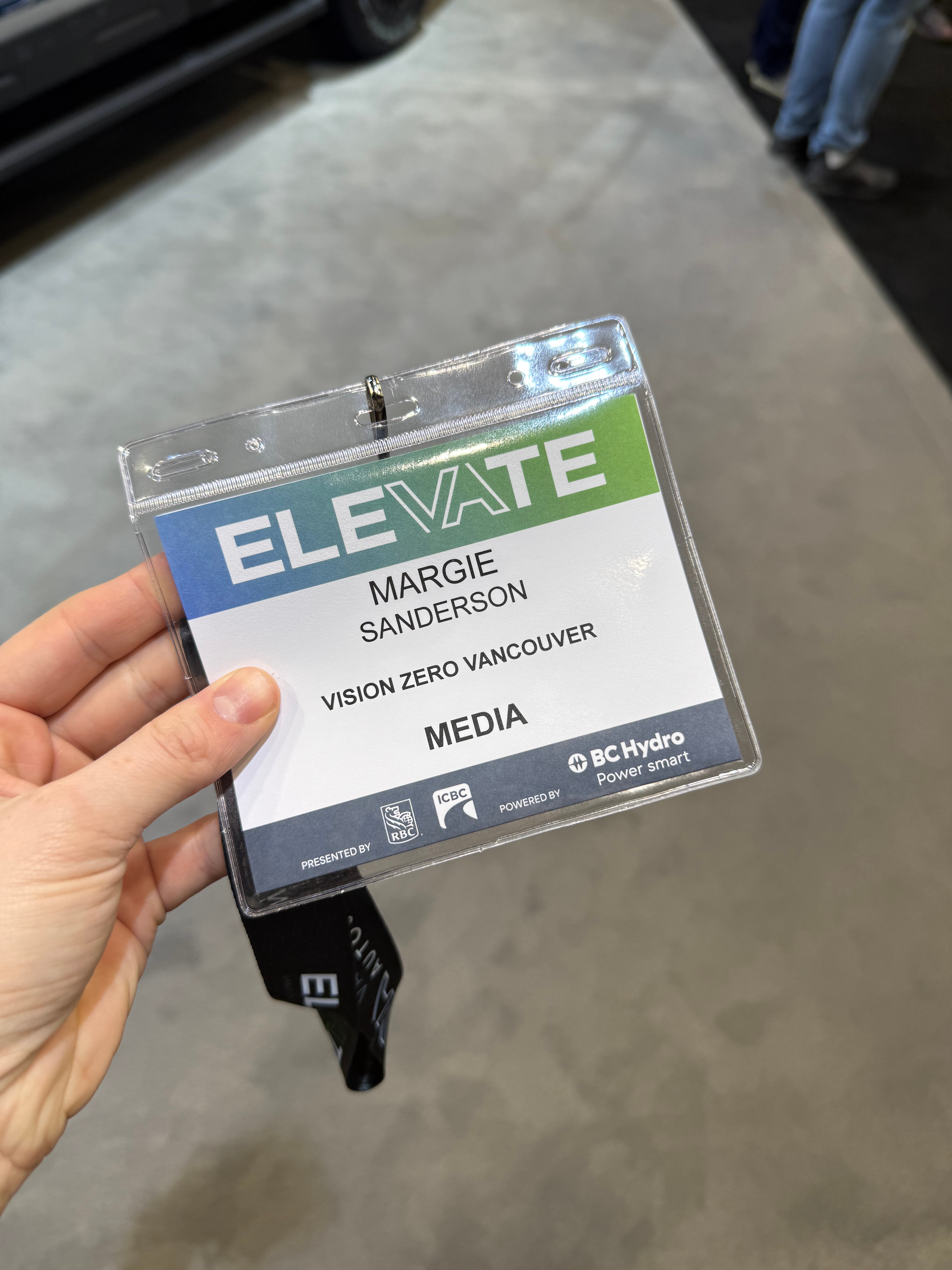
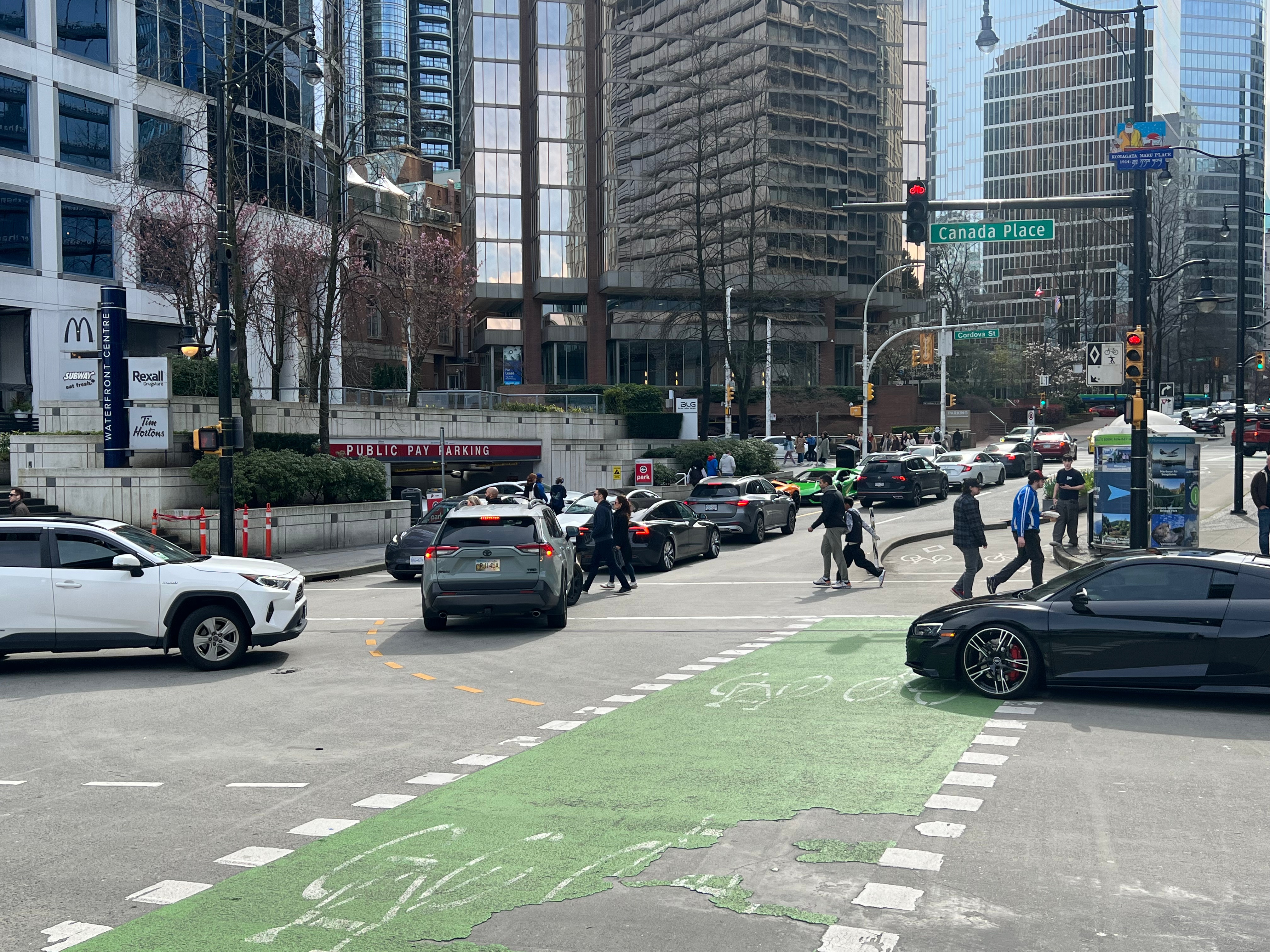
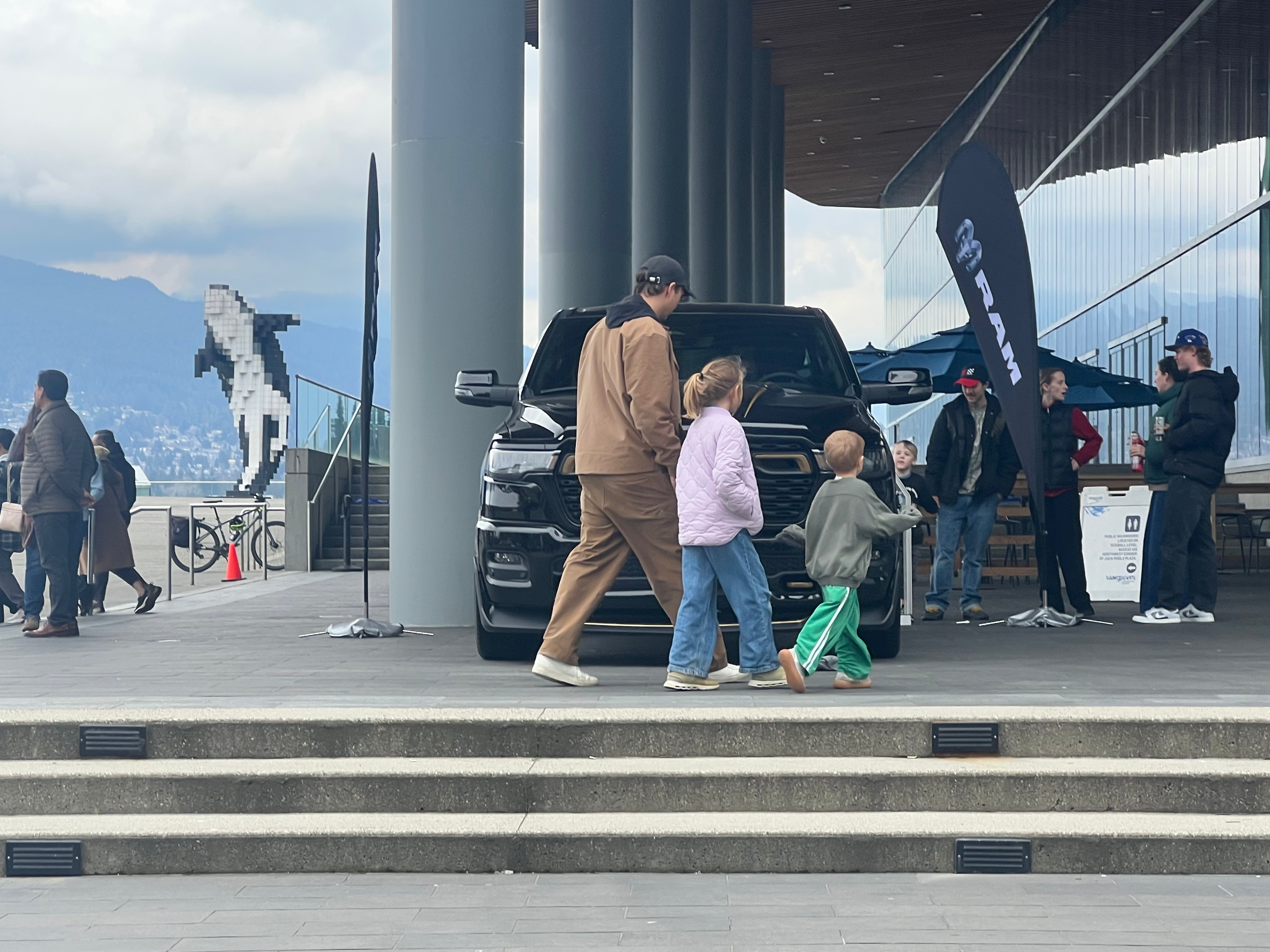
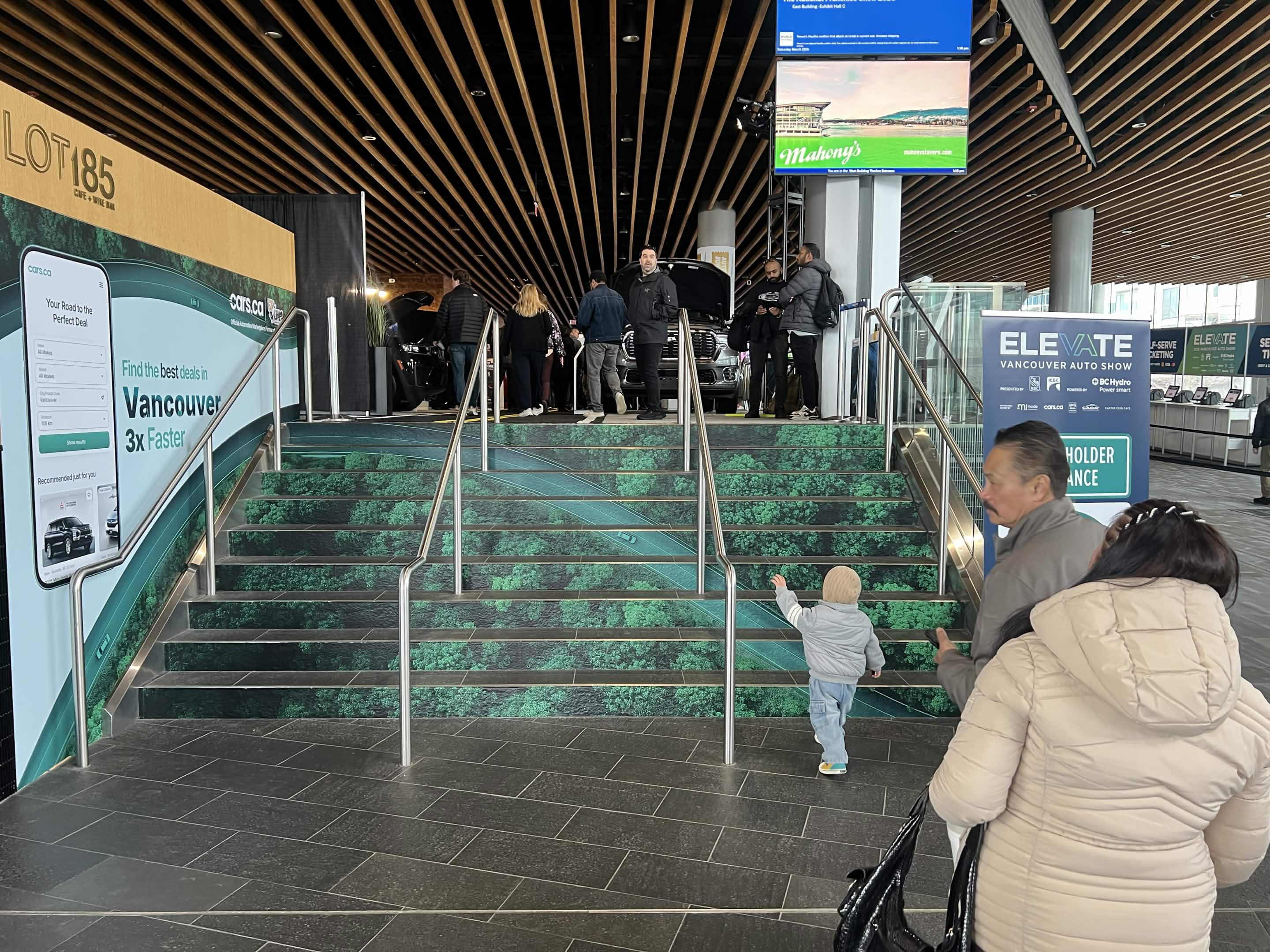
The day got started with a media tour. There were more than 150 outlets there, though most were car influencers. We heard from some auto industry execs about their dislike of BC’s EV targets (which the province has since lowered), got a warm welcome from Mayor Ken Sim (who mentioned that the auto show is a lot more exciting than civic politics) and then headed downstairs to see the cars. At each display a marketing rep would give us a pitch, we’d have some time to take photos and videos, and then we’d go on to the next. The entire tour lasted three hours, ending with a media scrum with automotive influencer & Fast and Furious actor Sung Kang (you can see what he had to say about road safety here).
The first thing that immediately struck me on the show floor was how much nature marketing was present. Despite the fact that cars are a leading contributor to climate change1, mountain and desert imagery was everywhere. Subaru was offering free hats with outdoor-themed patches. ICBC’s astro-turf booth featured a camping gear giveaway. A fake tree with a decal encouraged you to explore all that BC has to offer on the province’s 719,000 kms of roads. Nissan’s booth featured a sad looking snowman, a nod to their ‘iconic’ past commercial about conquering winter, and Honda’s booth featured an immersive tunnel full of screens displaying cars driving through nature scenes.
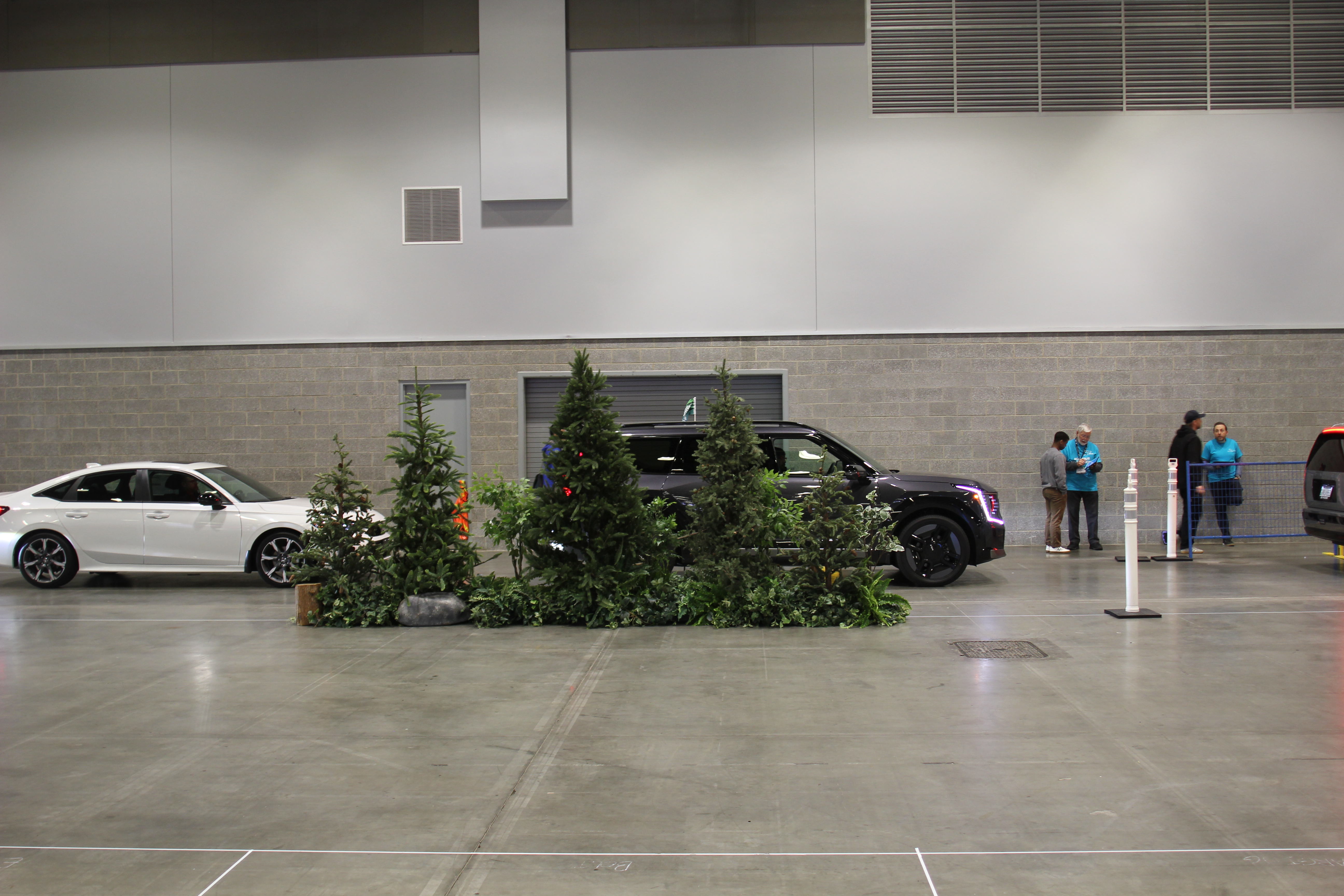
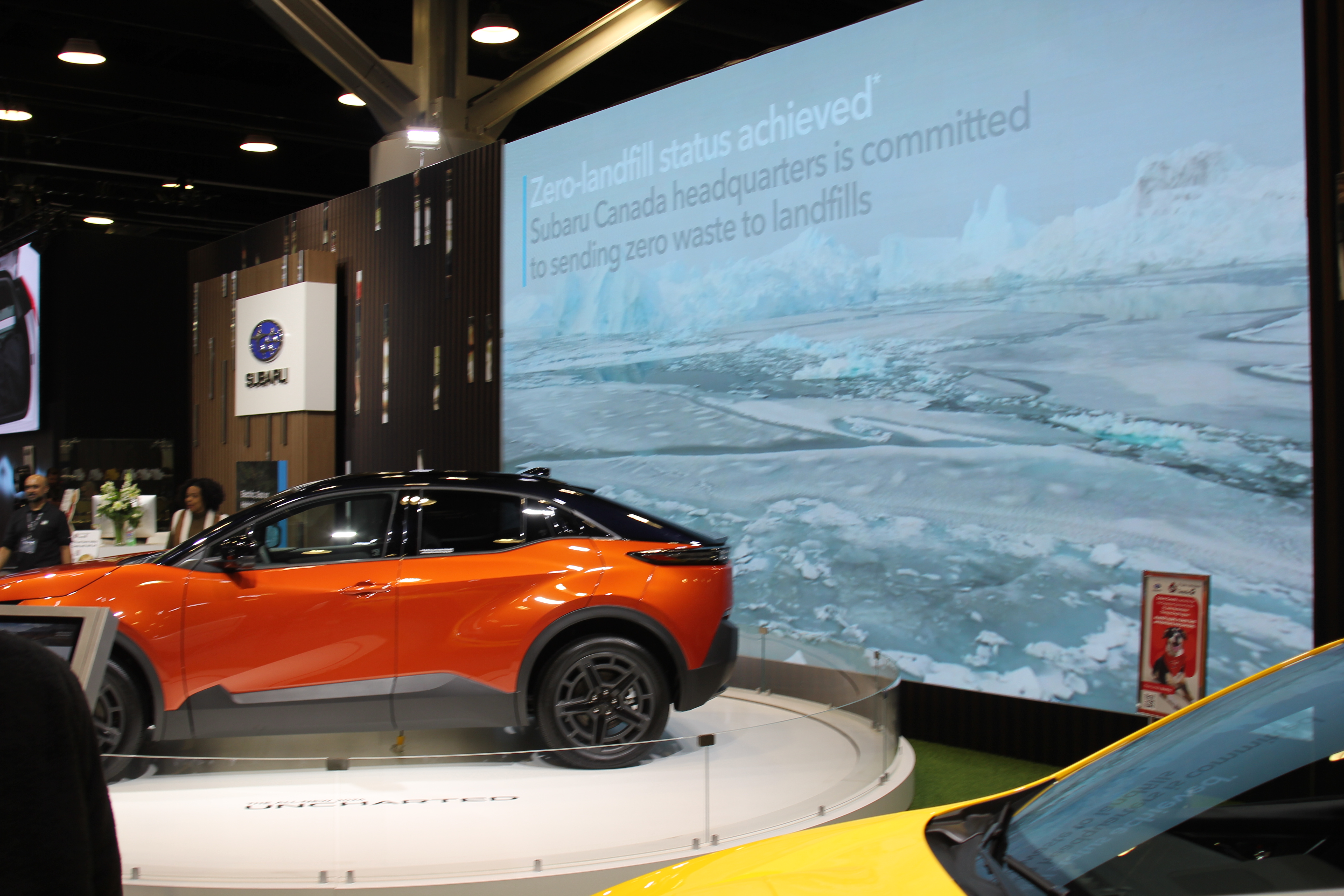
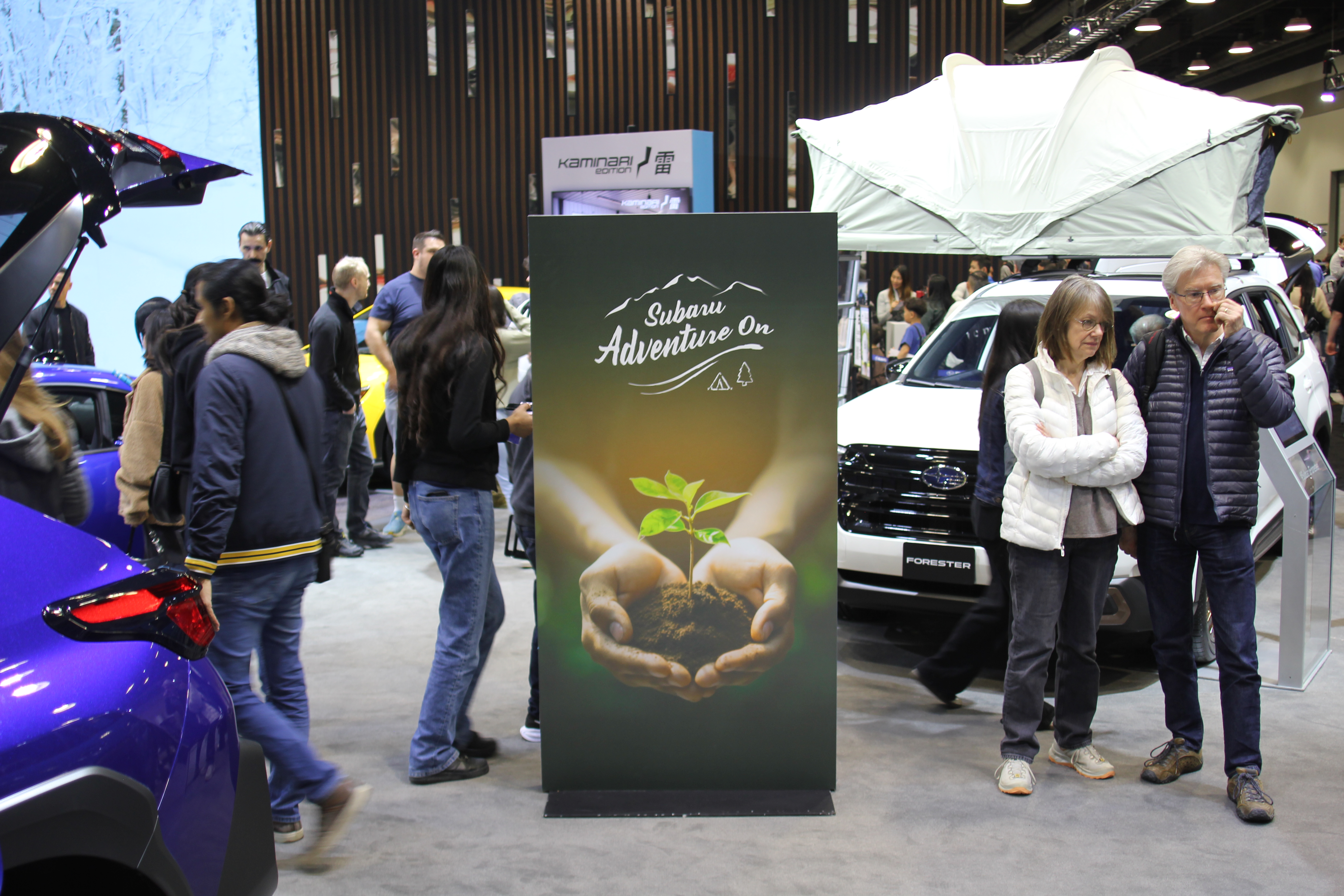
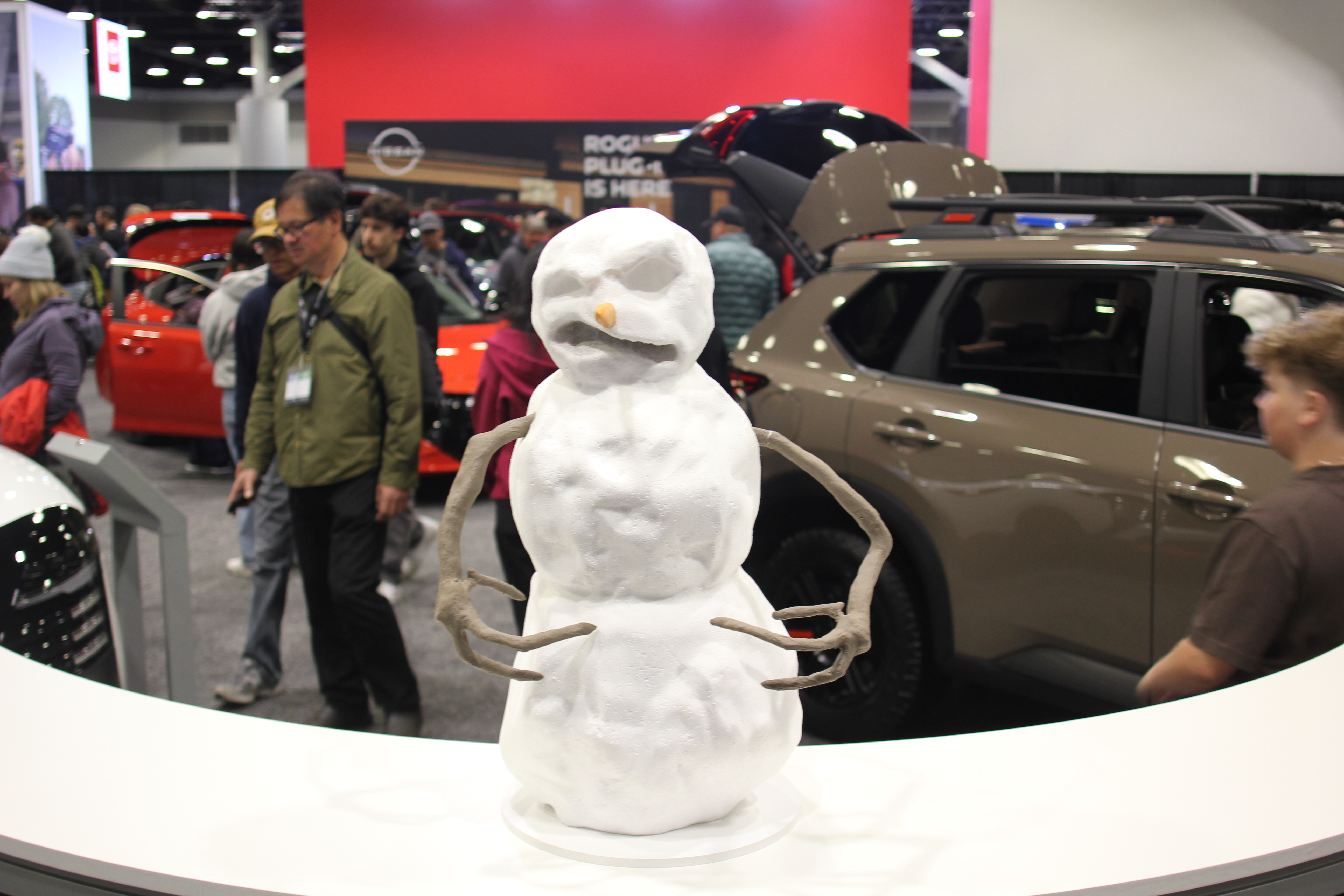
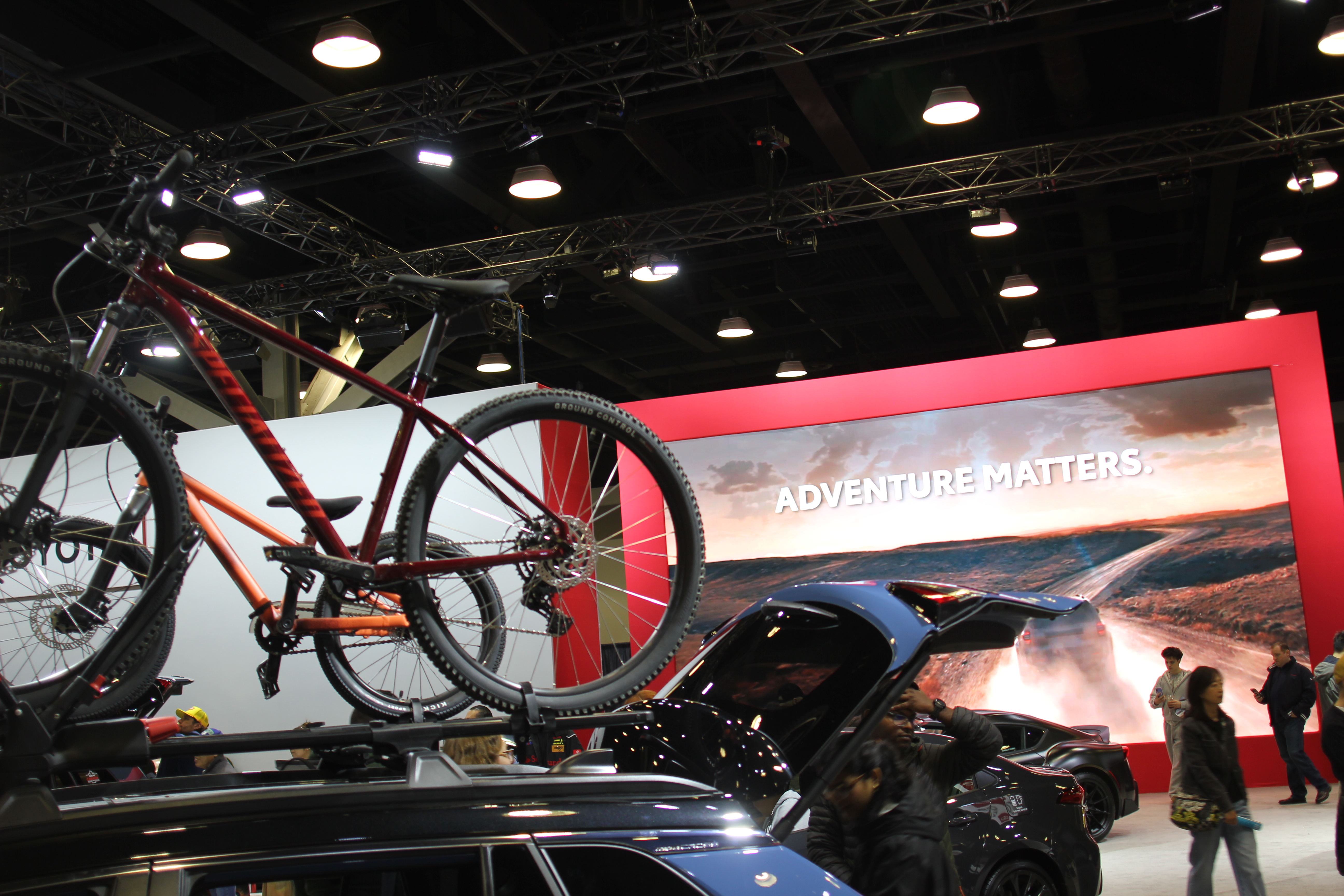

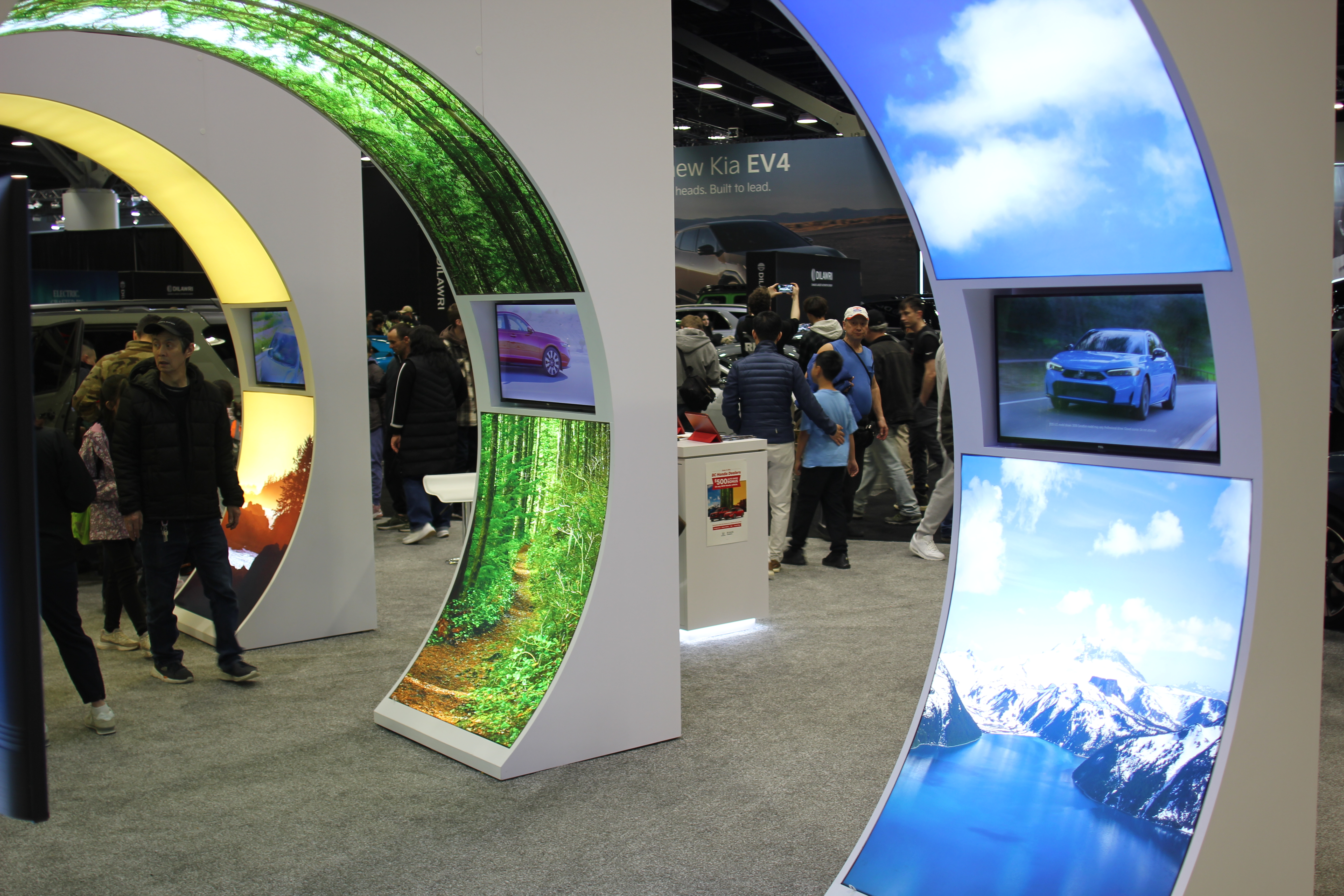
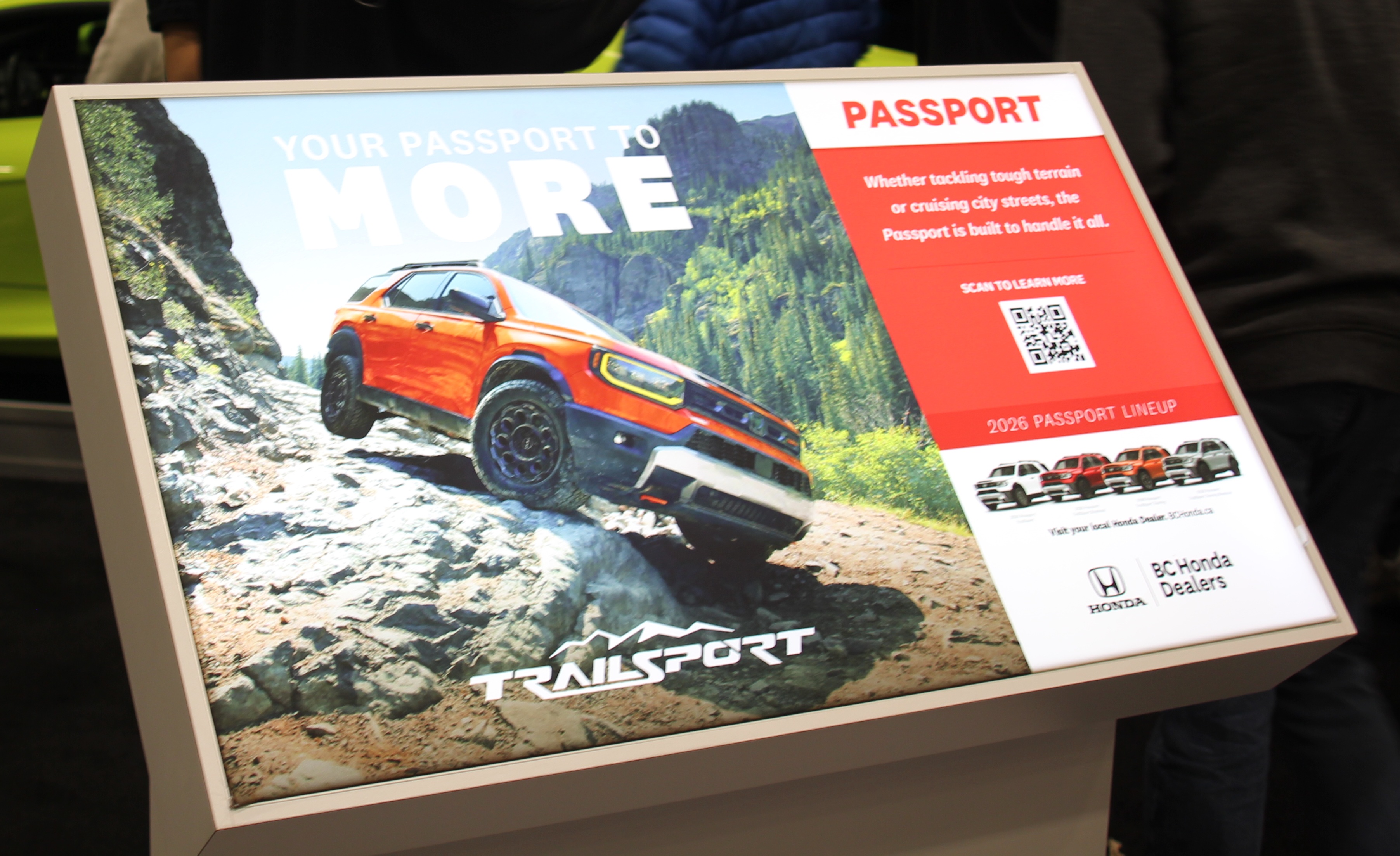
The marketing seemed to be saying that a vehicle was your ticket to freedom to explore the great outdoors. Given the role vehicles are playing in environmental destruction, this is textbook greenwashing. Over in the UK, the government actually banned a Toyota ad for promoting environmental destruction via off-roading2. As the field of ecology has shown us, off-roading, forest service roads, and vehicle access to wild spaces have come with devastating environmental consequences3. Unfortunately not even EVs are going to let us drive our way out of the climate crisis.
All that said, it’s true that many outdoor recreation spots across the region are accessible only by car. If you’re the “outdoorsy” type in BC, chances are you drive a lot. When there’s no other way to get somewhere, what else are people supposed to do? This is why we need serious investment in public transit, cycling infrastructure, and micromobility – tools that will give people real transportation freedom. Viable alternatives mean fewer people driving, fewer crashes, and improved road safety.
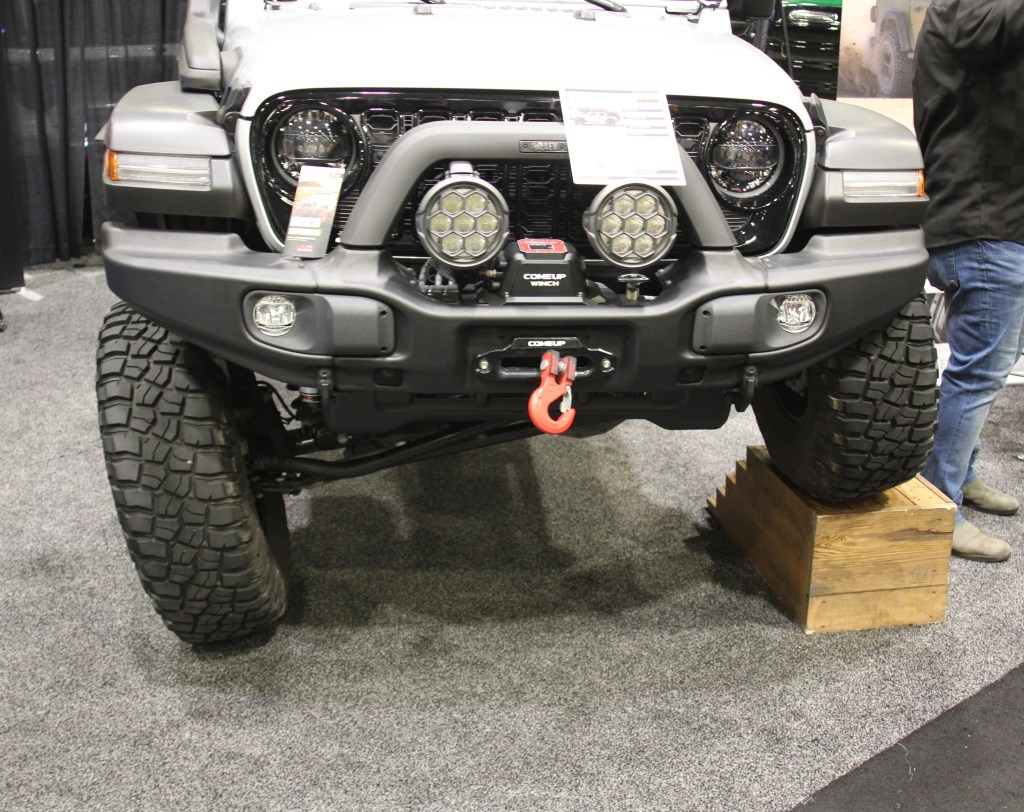
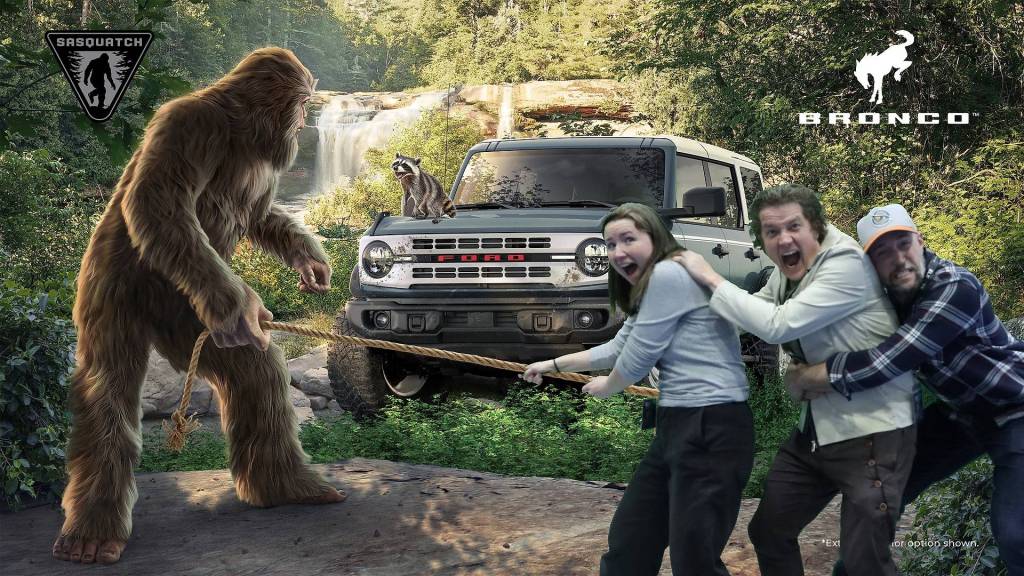
We asked the Ford rep if he knew what percentage of Bronco’s will ever go off-road – he said they don’t track this, but did cite their complimentary “Off Roadeo” course that new buyers can sign up for to learn off-roading skills. Despite the fact that this course is both free and well-reviewed by attendees, only about 30% of buyers choose to participate.
The vast majority of the vehicles we saw at the Auto Show are going to be driven around cities and suburbs on paved roads almost exclusively for their entire service lives. Remember this show is taking place in Vancouver, where our city’s annual transportation survey has found that half of the car trips being taken are less than 5km total distance4.
Marketing notwithstanding, most people are using their cars for banal day-to-day errands and commuting. While the EV Hummer can take you from 0 to 100km/h in just 2.8 seconds in ‘watts to freedom mode’ (special animations and sound effects included), we sure hope parents are not using that mode in the school pickup line.
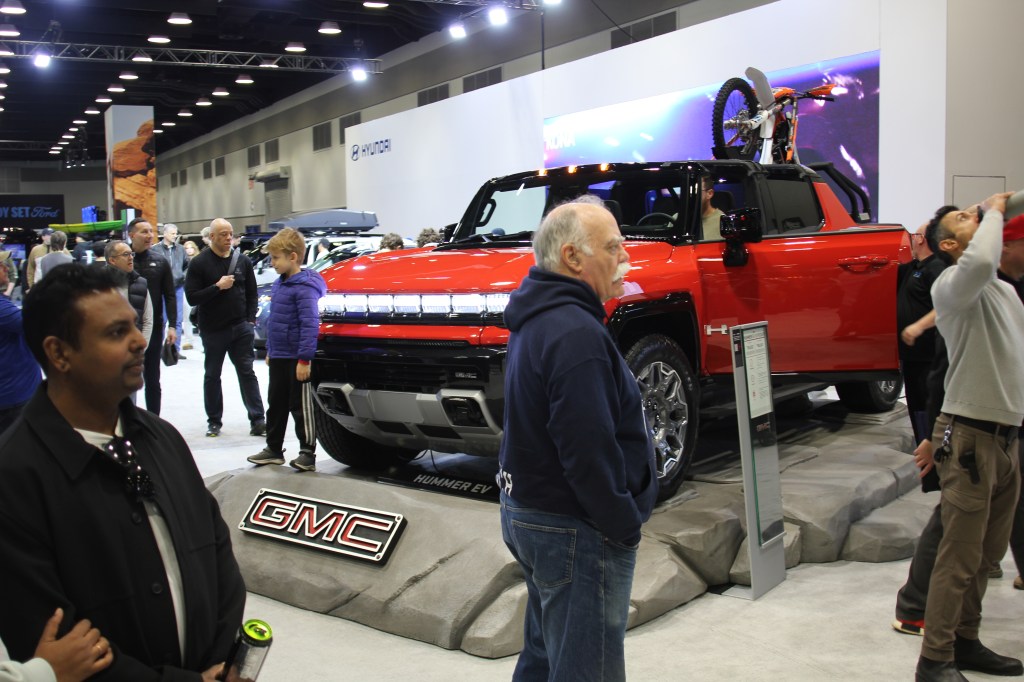
After taking in all the sights and sounds, I was joined by two other Vision Zero volunteers and we set to work having some conversations. While a lot of people come to the show for the luxury race cars, these represent a tiny fraction of the vehicle market. What we really had our sights on were the trucks and SUVs, which represent 85% of new vehicle sales in BC5. Over the last 30 years these vehicles have gotten about 4 inches wider, 8 inches taller, and over 1,000lbs heavier6. And they just keep growing.
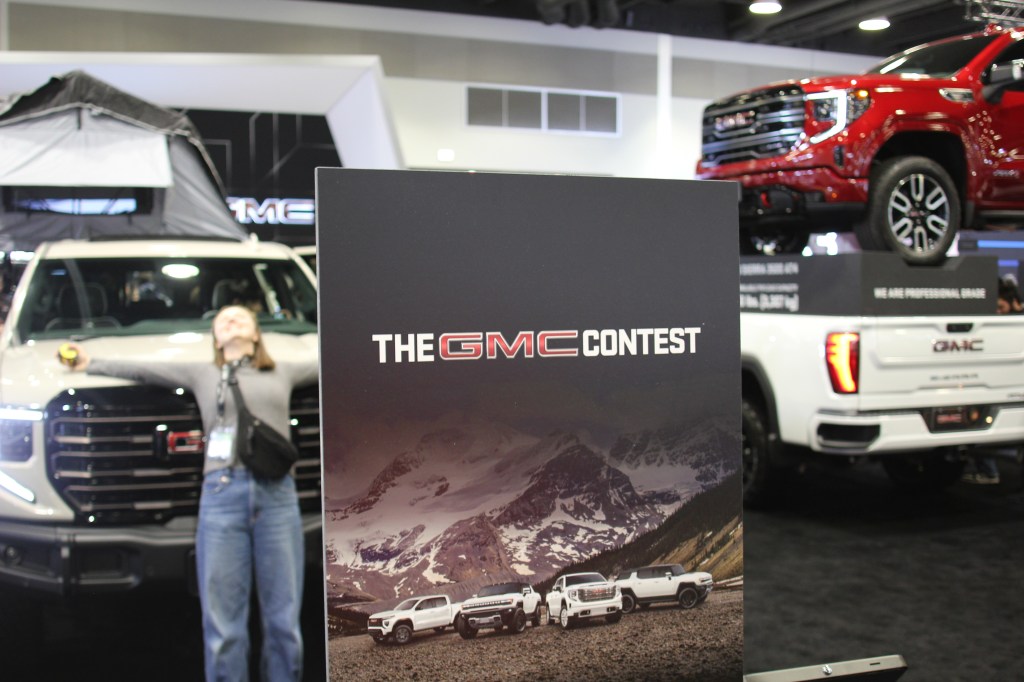
These changes aren’t only aesthetic. Taller vehicles are significantly more likely to seriously injure or kill a pedestrian, with studies finding children are eight times more likely to die when struck by an SUV compared with a sedan7. There are three main reasons why these mega-vehicles are so much more deadly:
- Poor sight lines & many blindspots mean drivers have a harder time seeing pedestrians, especially children or people using a wheelchair. Unfortunately cameras aren’t a perfect solution to this – despite the fact that backup cameras have been mandatory in new vehicles for nearly a decade, 50 children are backed over by vehicles every week in the United States8.
- Taller hoods mean impacts are right at torso or head height, rather than in the lower body for smaller cars. This inherently leads to a higher chance of catastrophic injury or death, and also makes it more likely that the pedestrian will be sent to the ground and then run over, rather than colliding with the hood if the car were smaller.
- Since momentum is a function of weight times speed, a heavier vehicle transfers more momentum. Greater impact force = greater chance of death.
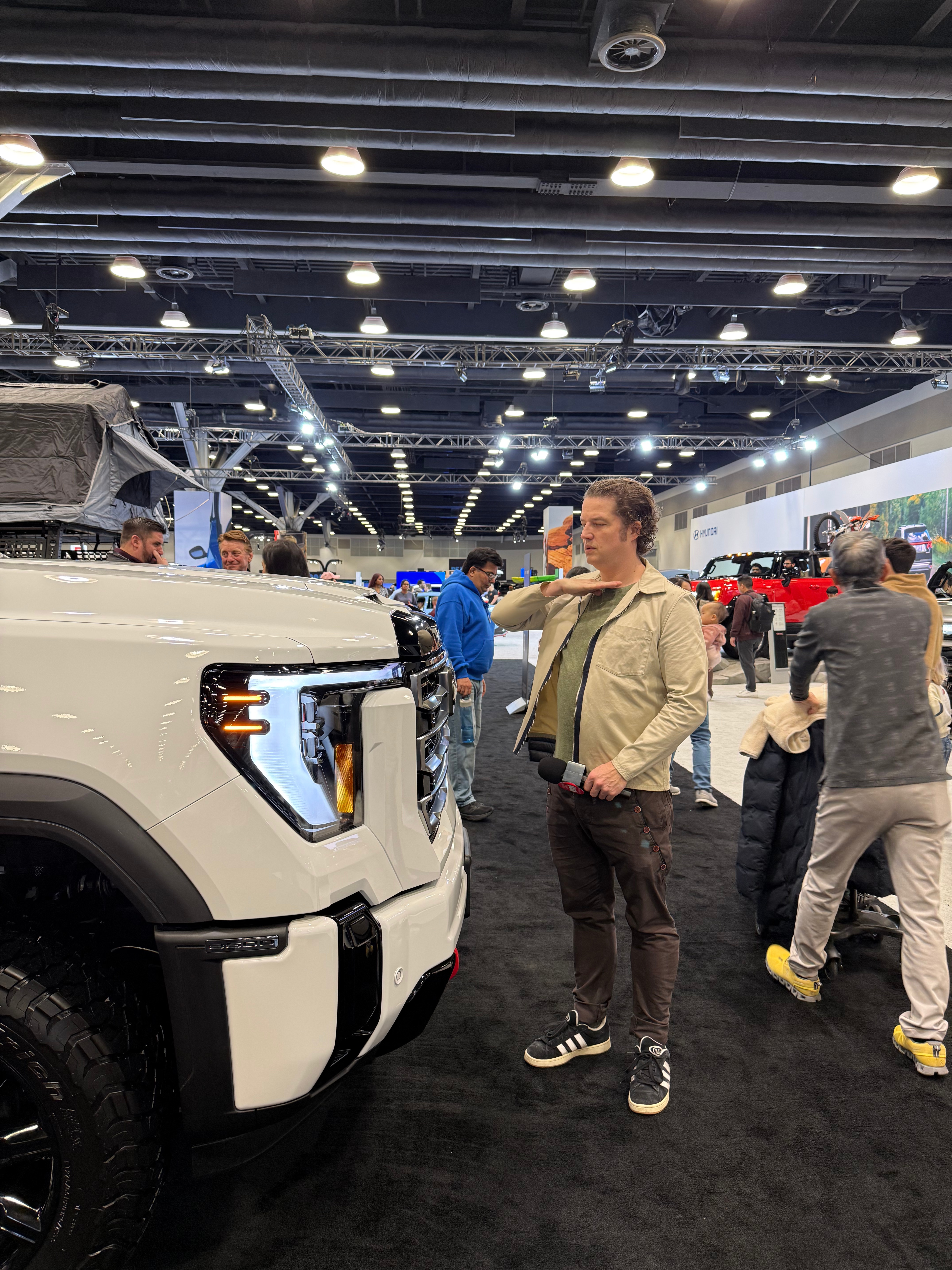
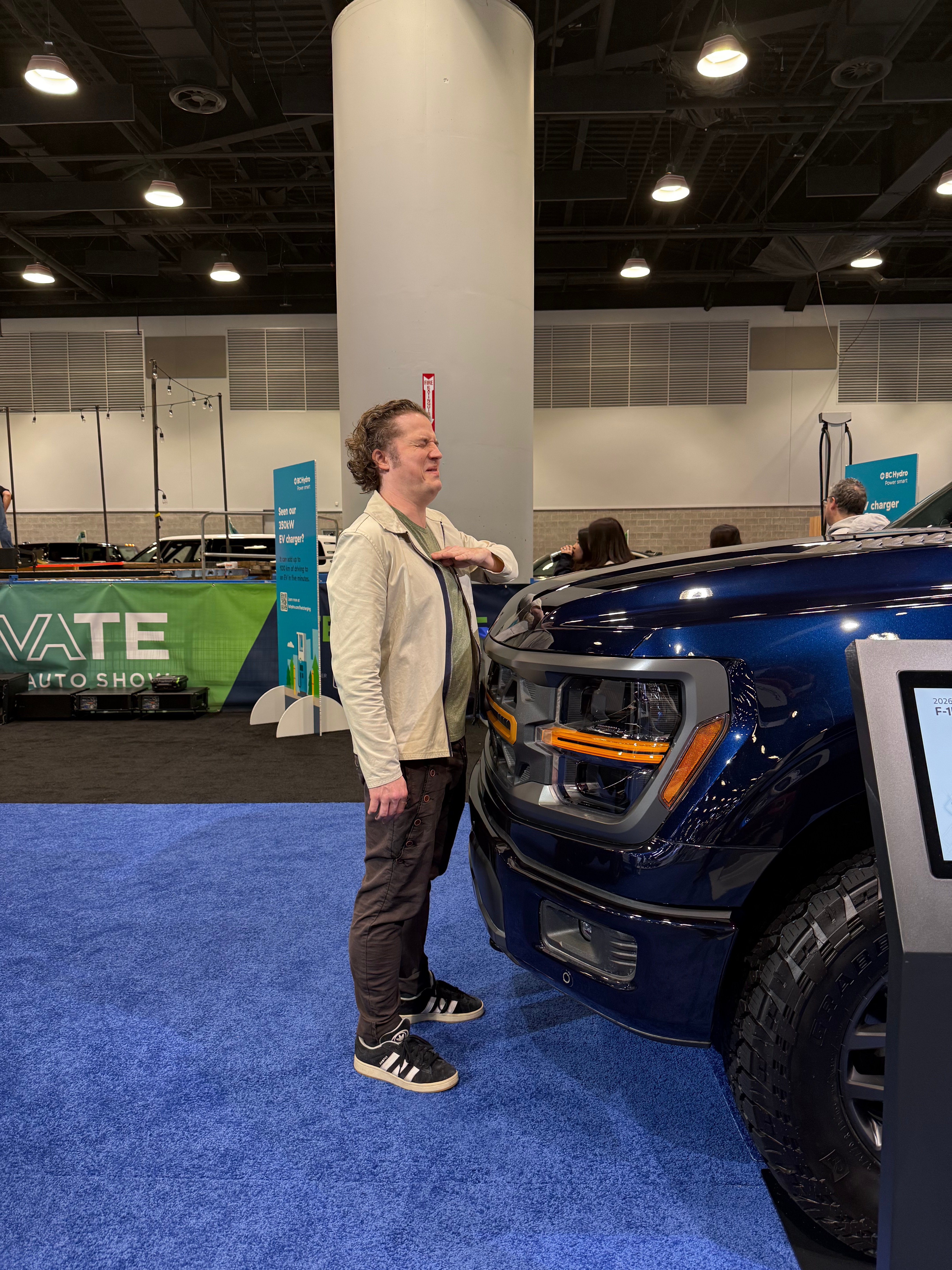
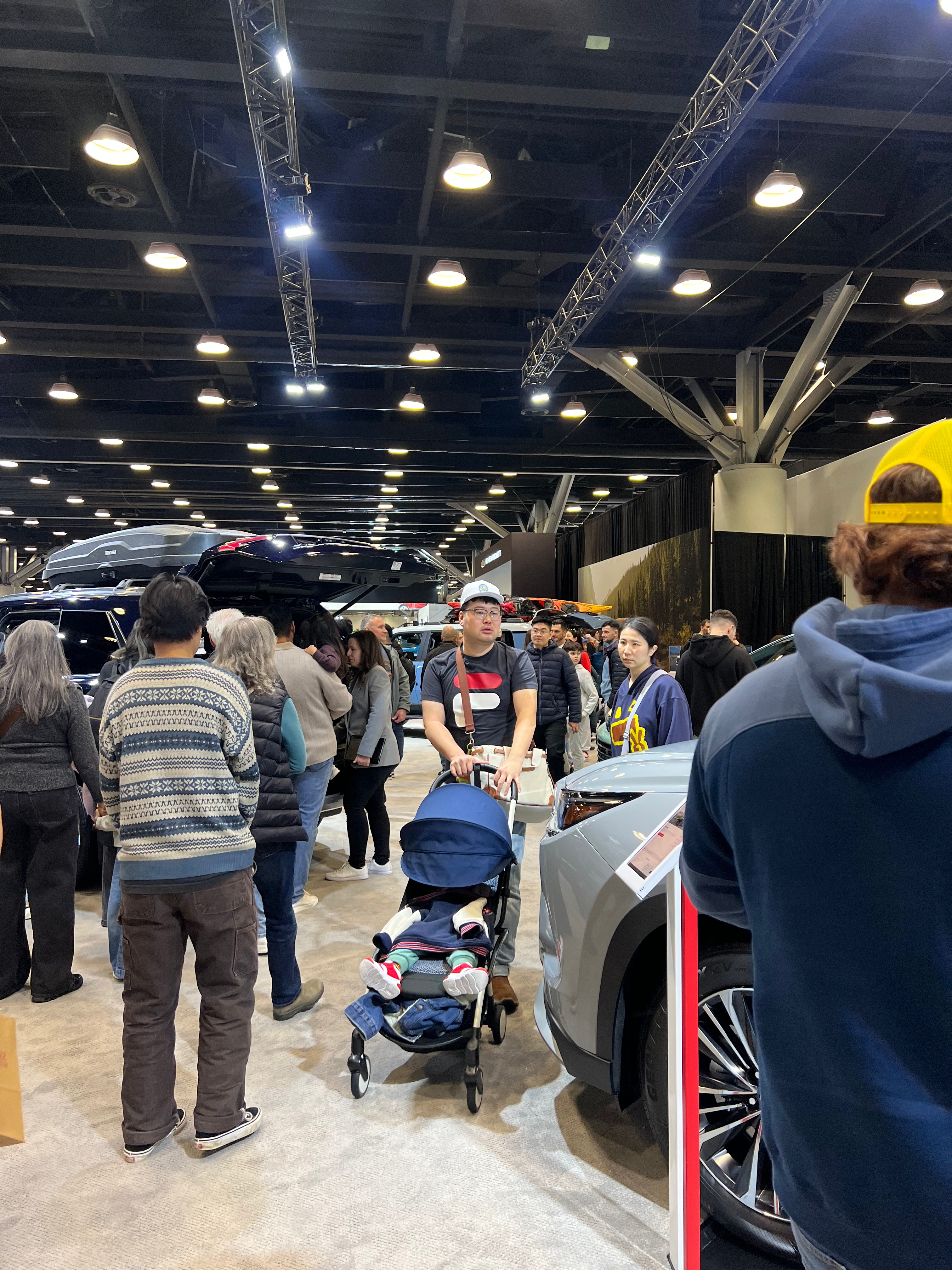
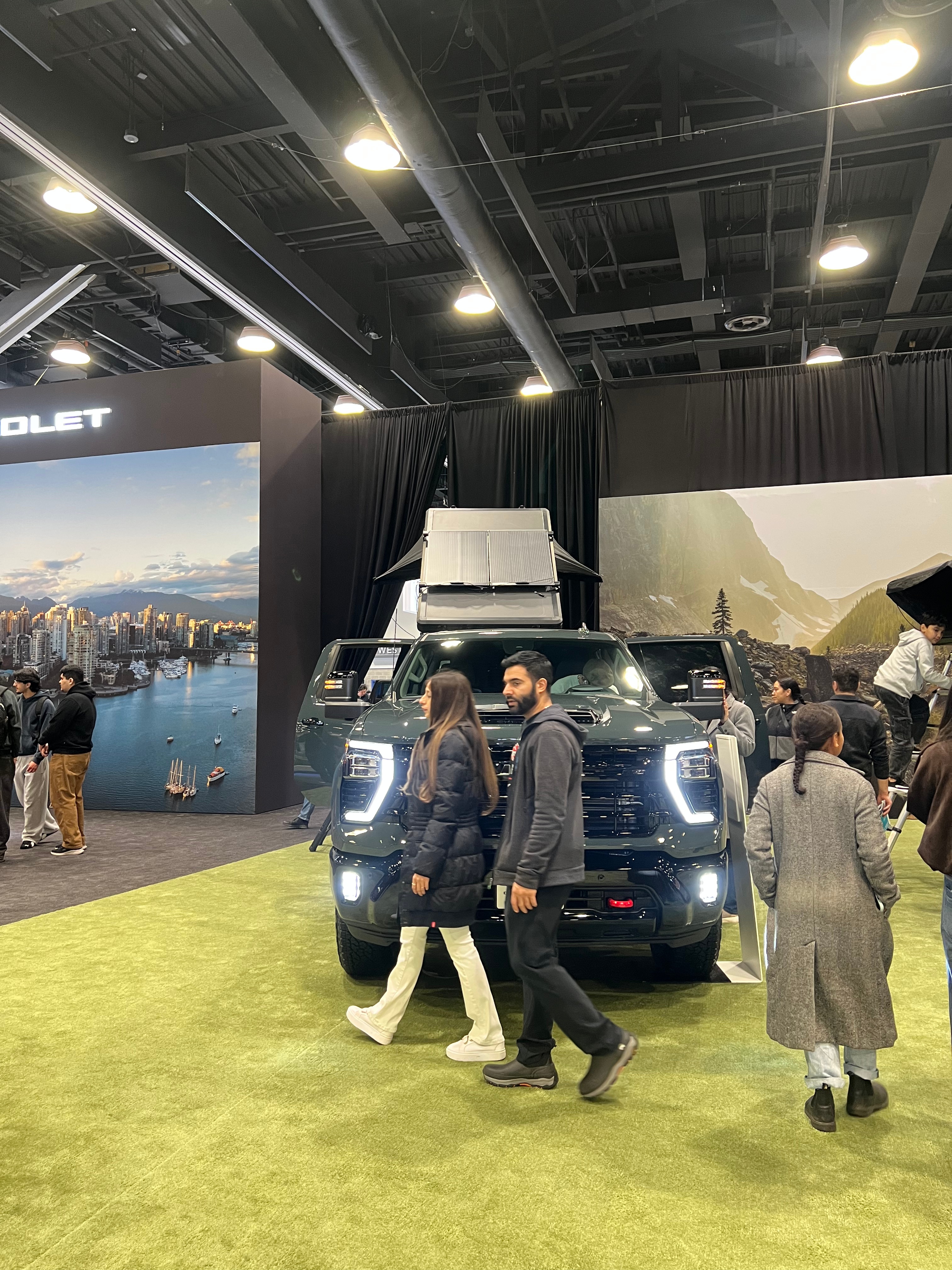
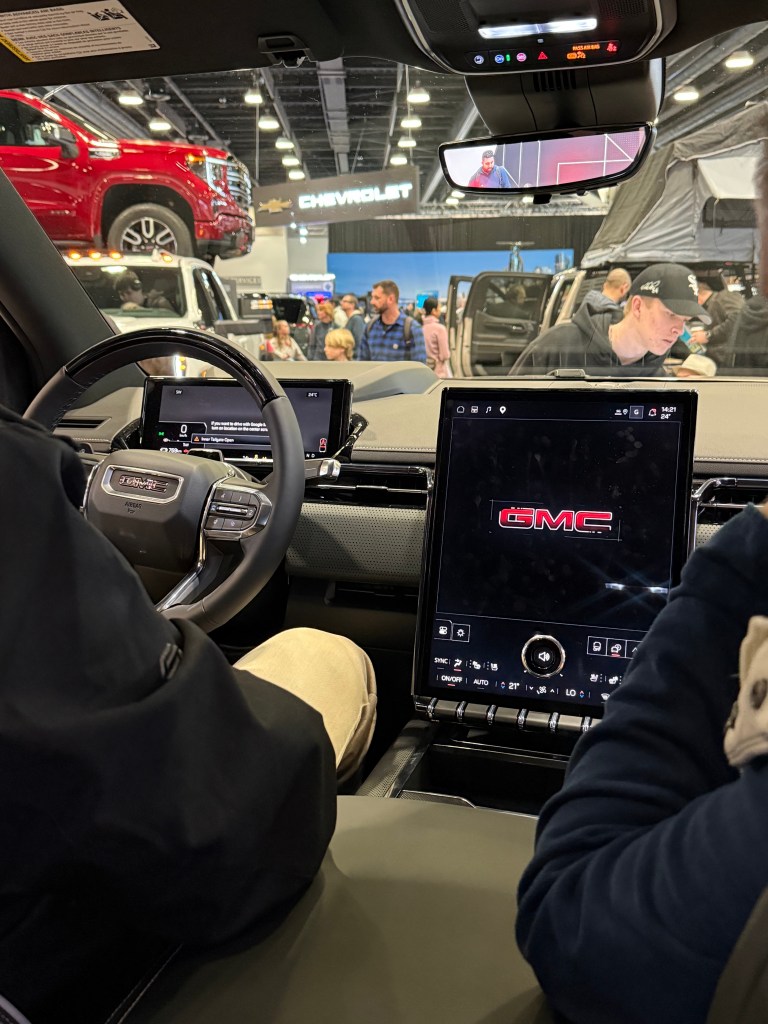
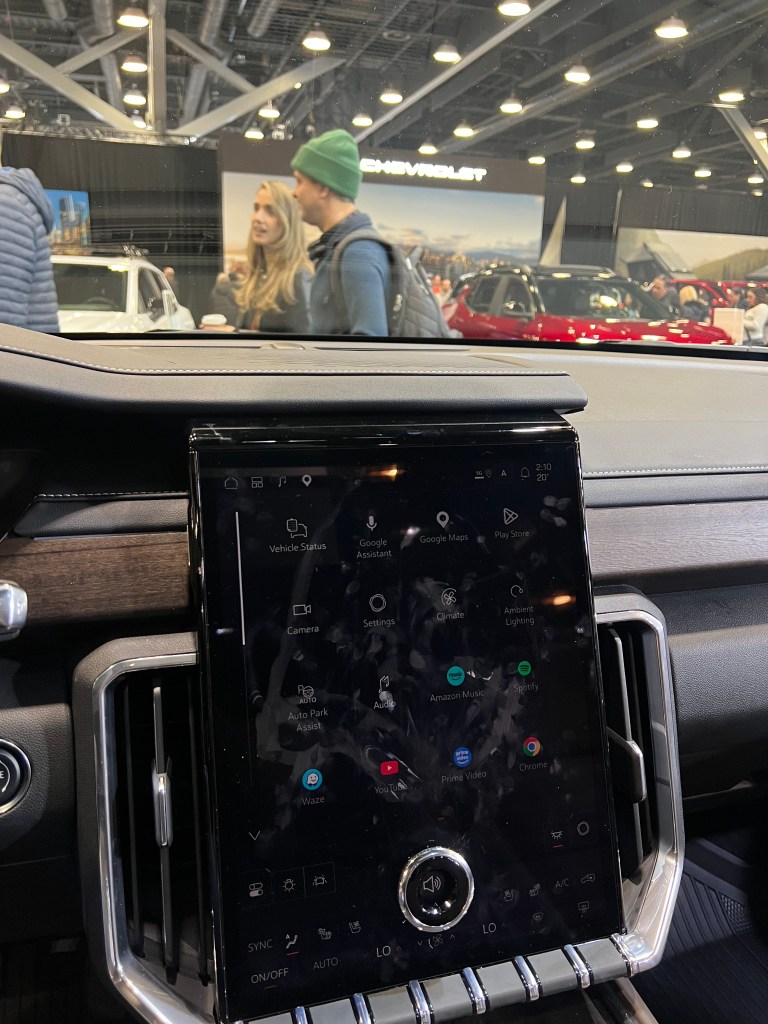
We were expecting to see some very large vehicles, but what I wasn’t quite expecting was the very large screens inside. From the driver’s seat, many cars featured display screens larger than my laptop with apps like YouTube, Amazon Prime Video, and built-in games. The law in BC stipulates that “A person may not have a television image displayed within view of the driver unless the image displays pictures, information or data solely designed to assist the driver in the safe operation of the vehicle” – this was pretty hard to square with the reality of vehicles available at the show.
A lot of people don’t know any of the safety information about large vehicles when they’re shopping for a car, and manufacturers sure aren’t shouting it from the rooftops. What we were curious to learn at the auto show is, is there a utility to all this? Why are we making cars like this?
While no one would speak with us on camera, we actually found that most people on the floor were super open to our questions. Many of them had been in the industry for a long time and experienced the vehicles changing before their own eyes.
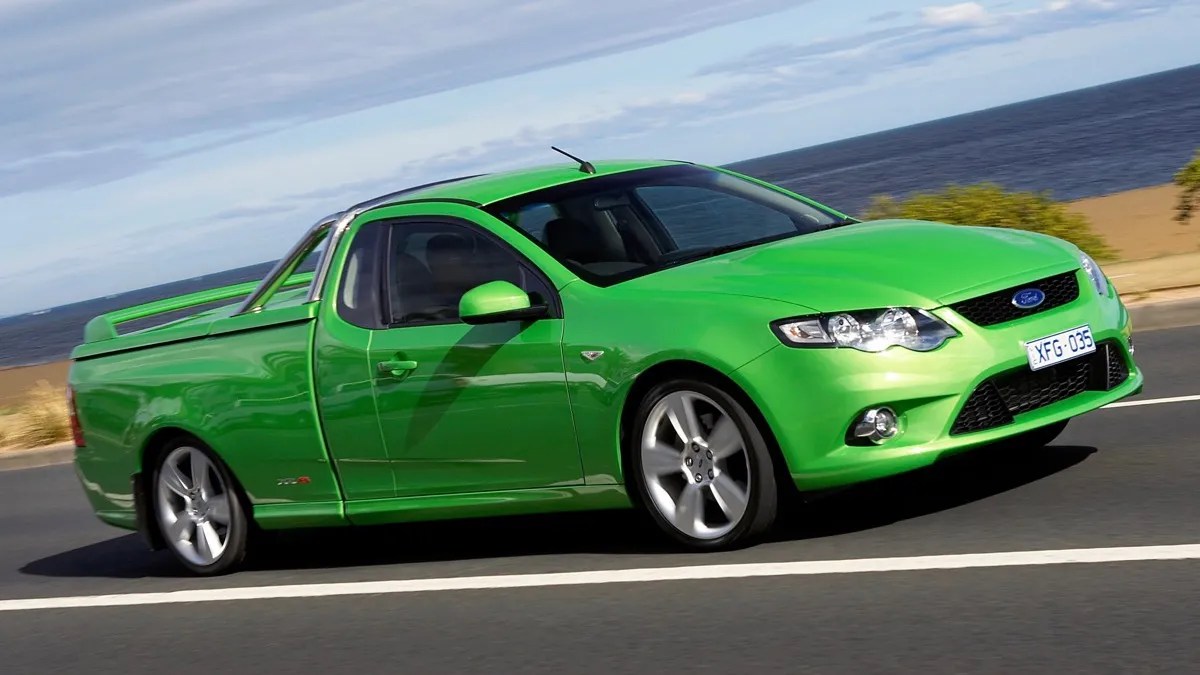
A Volvo rep from Alberta shared his disdain for macho truck culture. The Volvo display was also the only one at the show that prominently featured safety, proudly stating their vision that “no one should be seriously injured or killed in a new Volvo car” (we did have some questions about people outside the car…). A rep from GMC told us their vehicle sizes didn’t have any utility to them at this point, and shared about his love of the Australian ‘ute’ style.
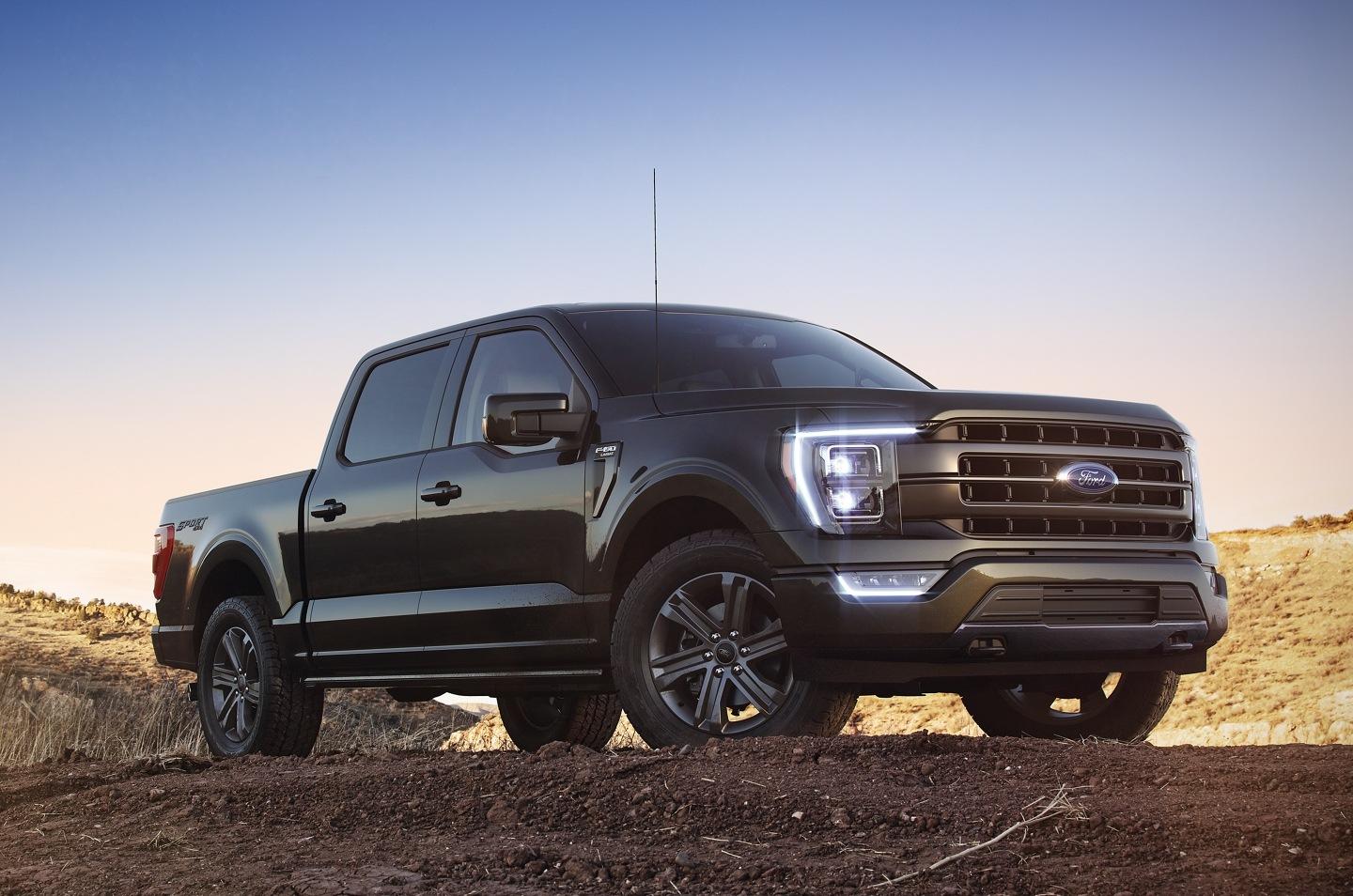
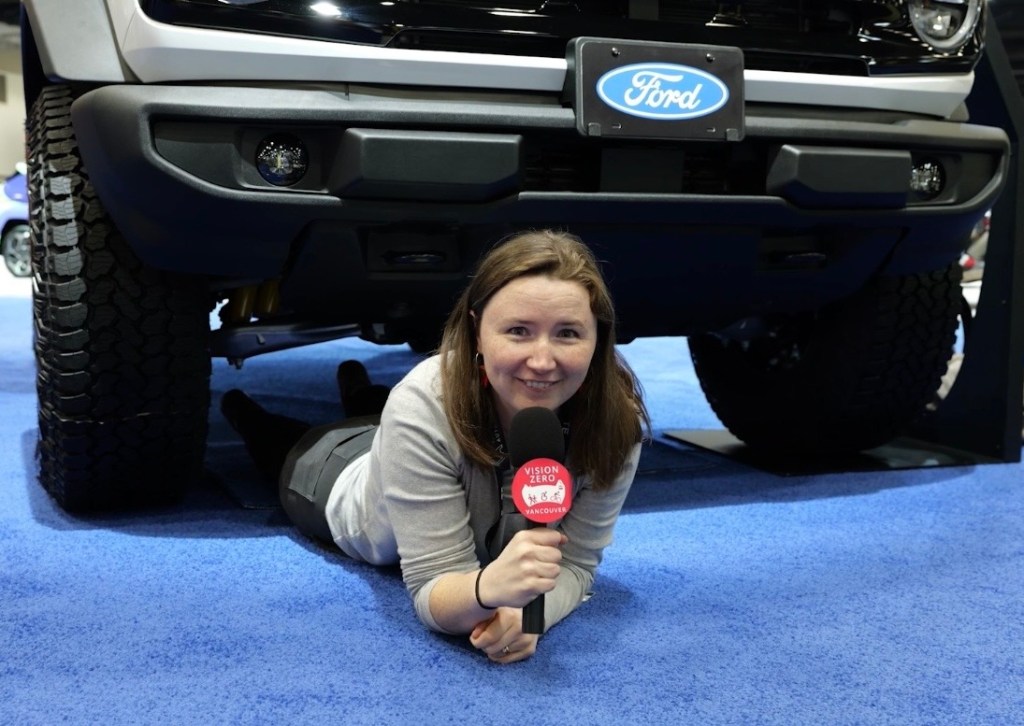
One salesperson suggested that taller vehicles might be safer because pedestrians could just lie down and let the car pass over them. (We tried this out and you might be shocked to learn it doesn’t work.) When I asked the Ford rep what he saw as the benefits of the F-150’s gigantic size, he said my line of questioning extended ‘beyond auto-show territory’ and he didn’t have a comment.
We asked several salespeople about safety innovations in their vehicles and what technology they were most excited about. At Volvo we learned about their new AI-powered adaptive seatbelt, which uses a variety of sensors to gather data about the traffic conditions and the passenger’s body and make corresponding adjustments to its load settings. This was the only piece of new technology we learned about, with other manufacturers largely citing systems that have become standard in new vehicles like cameras, side mirror alerts and other driver assistance systems.
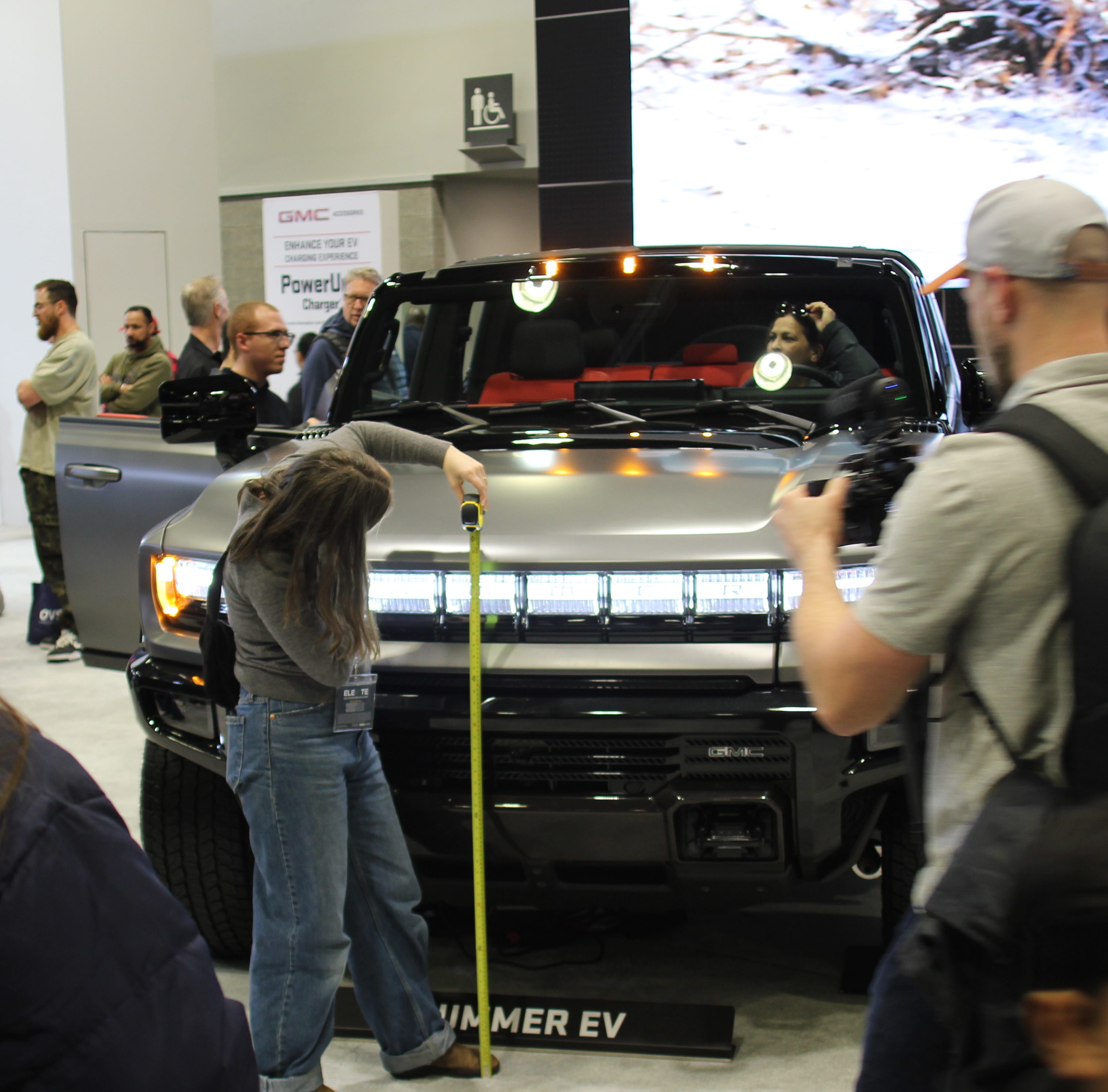
Hardly anyone could name an improvement for people outside the vehicle – a Chevrolet rep mentioned “good bicycle stuff” and the GMC rep also touted the Hummer EV’s cyclist detection system. We didn’t get to see it for ourselves, but he explained that when a cyclist comes out of nowhere the side mirror alert would beep and light up to tell the driver. We did point out that it’s unlikely the cyclist would have come out of nowhere, and perhaps improved sightlines might help with this. Keep in mind that the Hummer EV weighs 9,000lbs, has a hood height of 122cm (48 inches), and can get from 0 to 100km/h in 2.8 seconds. The Hummer EV, as configured at the auto show, also costs $169,652, and while it was certainly on the pricey end, most vehicles we saw at the show cost at least $60,000. So much for being a bastion of the working class.
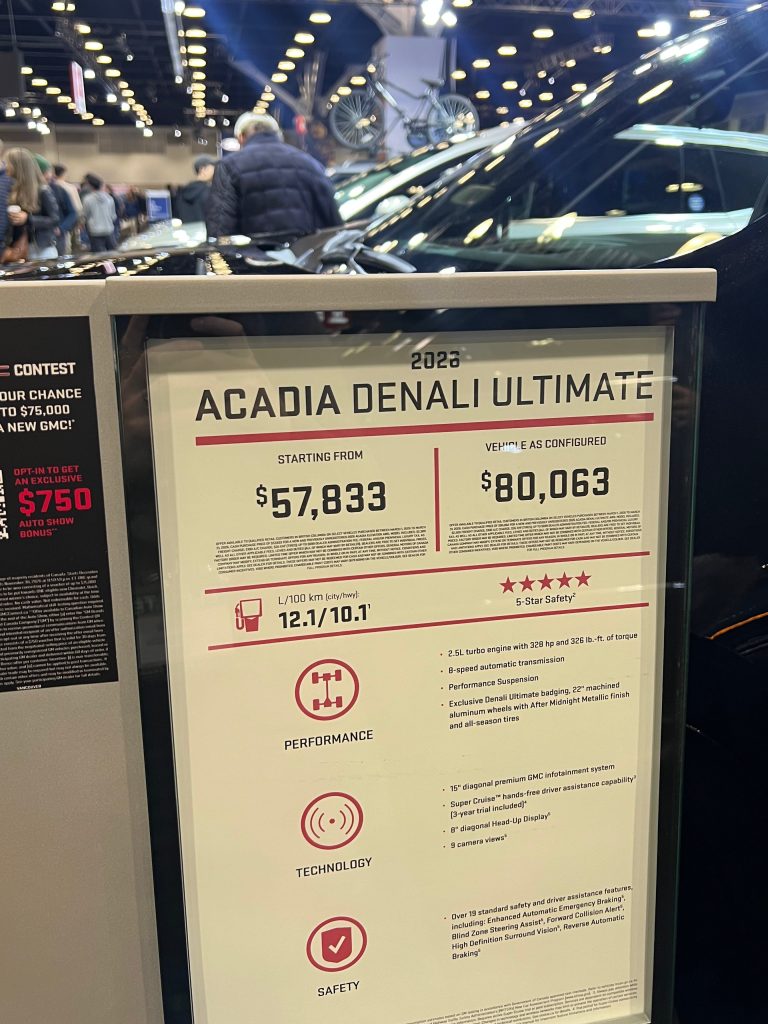
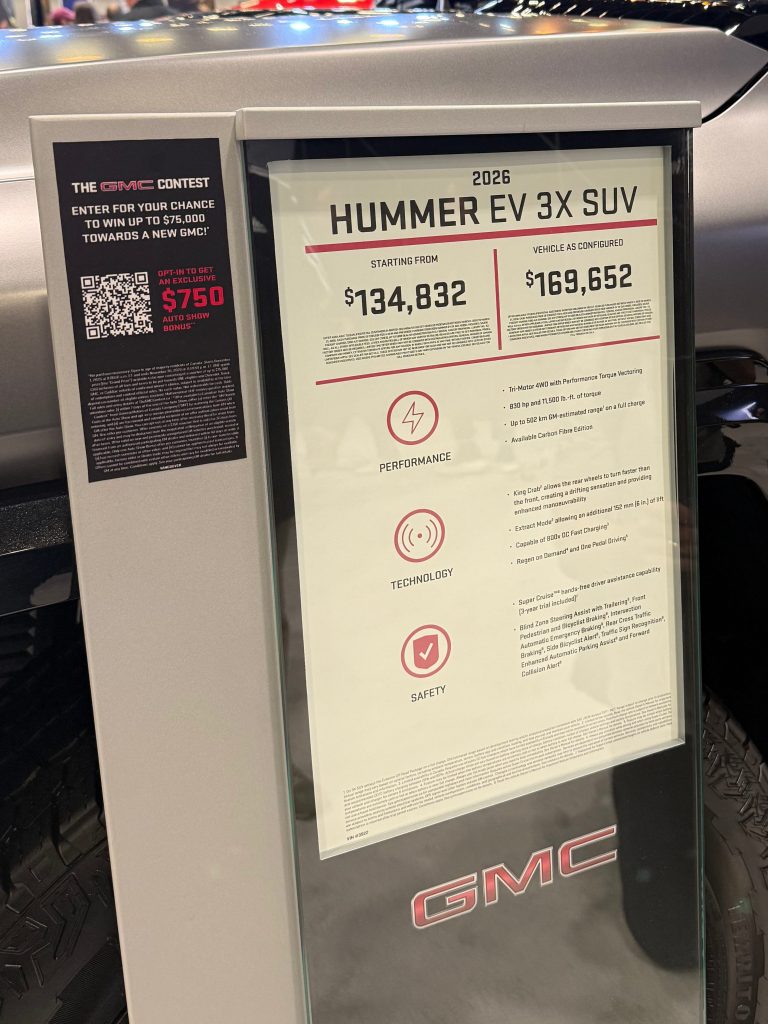
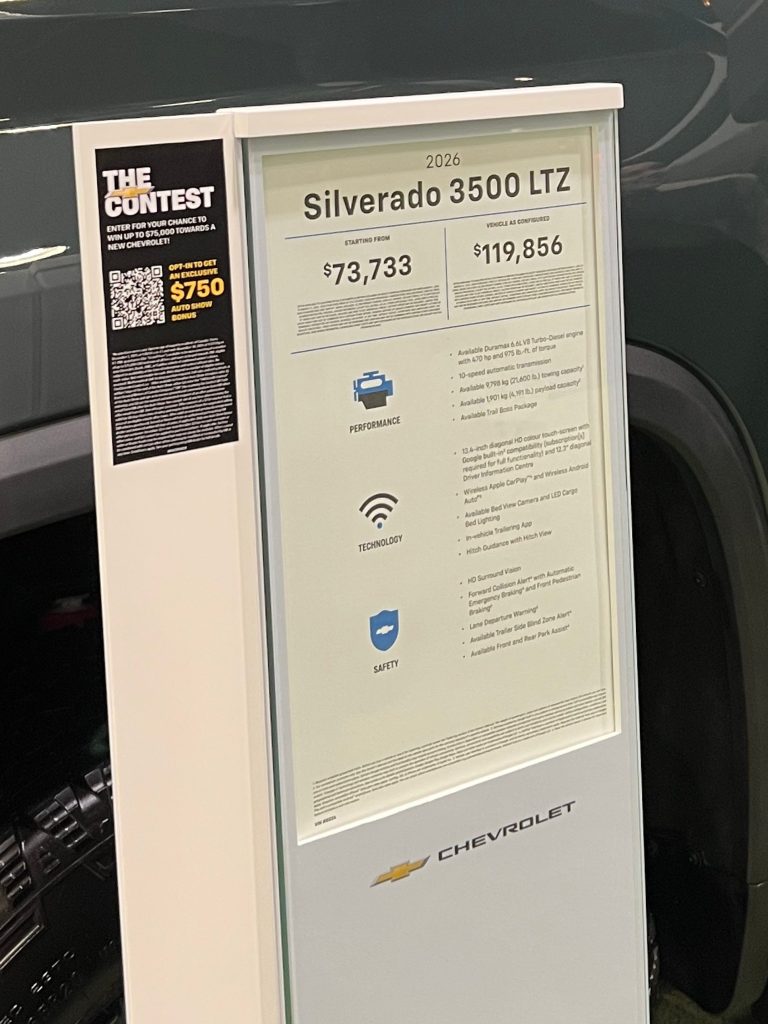
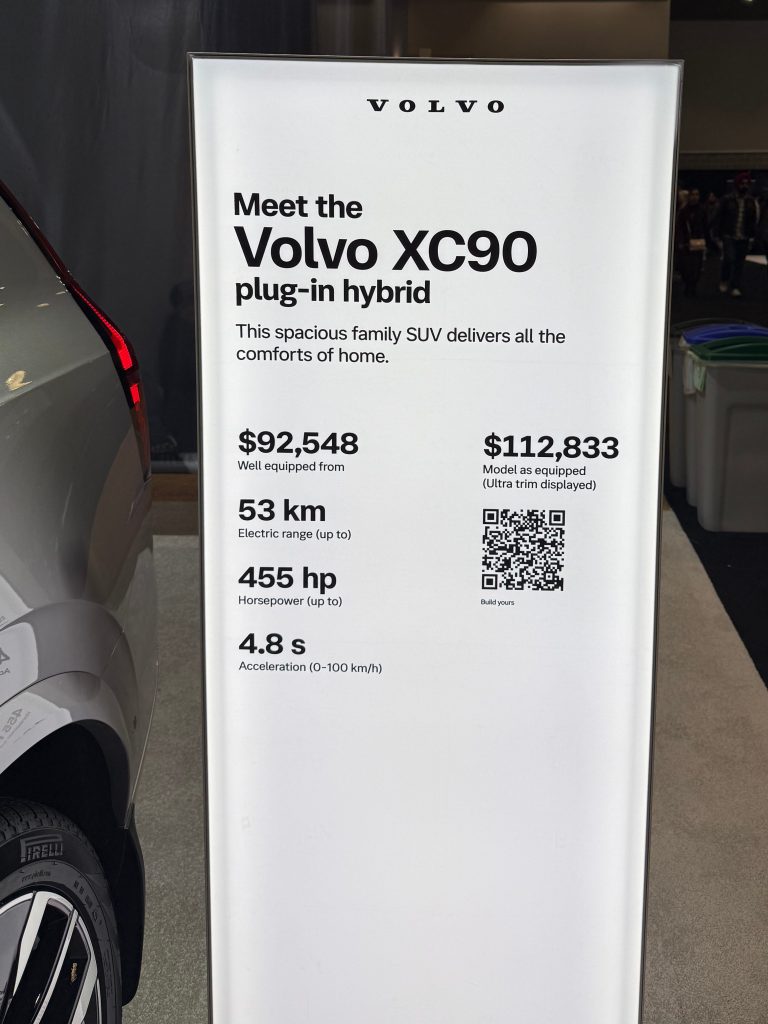
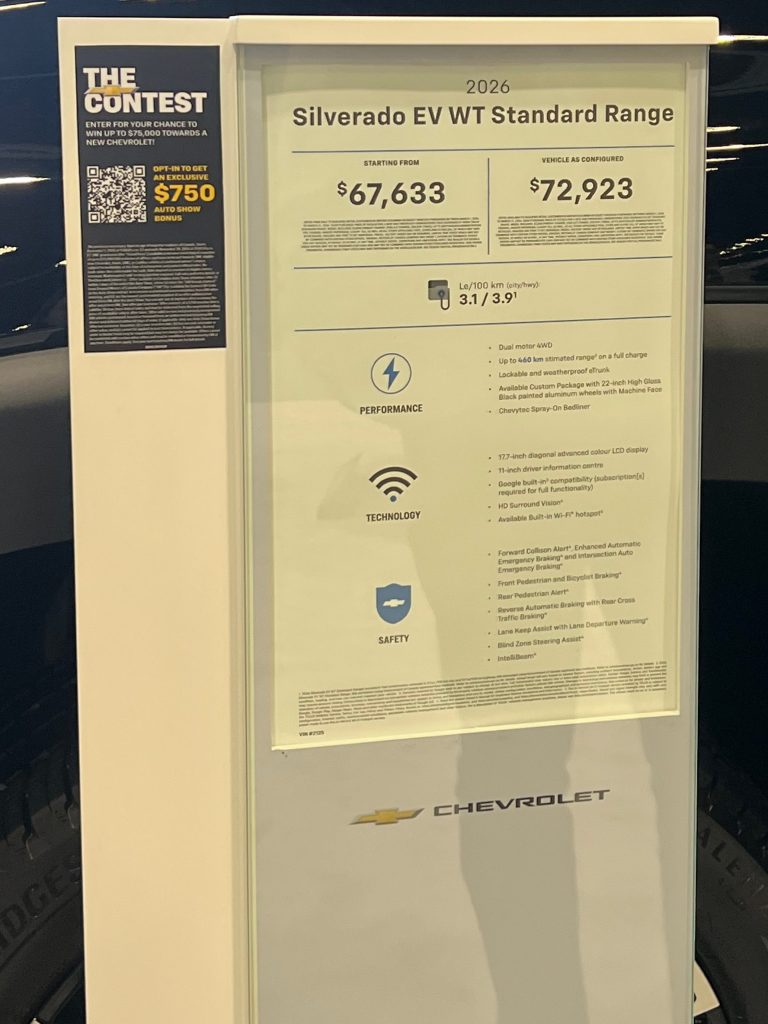
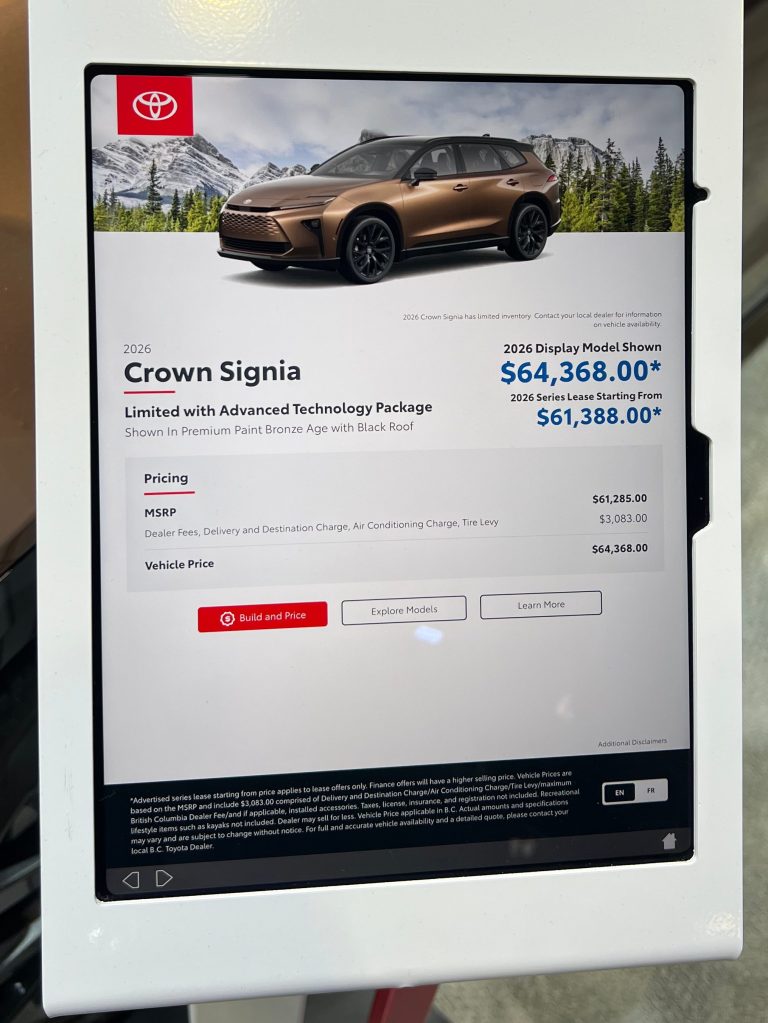
On the whole, the auto show highlighted neither car manufacturers nor government regulations are working to offer consumers a diversity of safe, functional and practical vehicles that do not exceed safe civilian use. If we want safe roads, we have to offer safe vehicles – for those in and out of them. Smaller, lighter vehicles exist around the world (and that includes modern pickup trucks from major brands, not just adorable Kei trucks), but are often not available here in Canada. While some will say that the North American market simply loves these big cars and won’t buy small ones, remember that the auto industry spends tens of billions of dollars on advertising to this market every year. We deserve better.
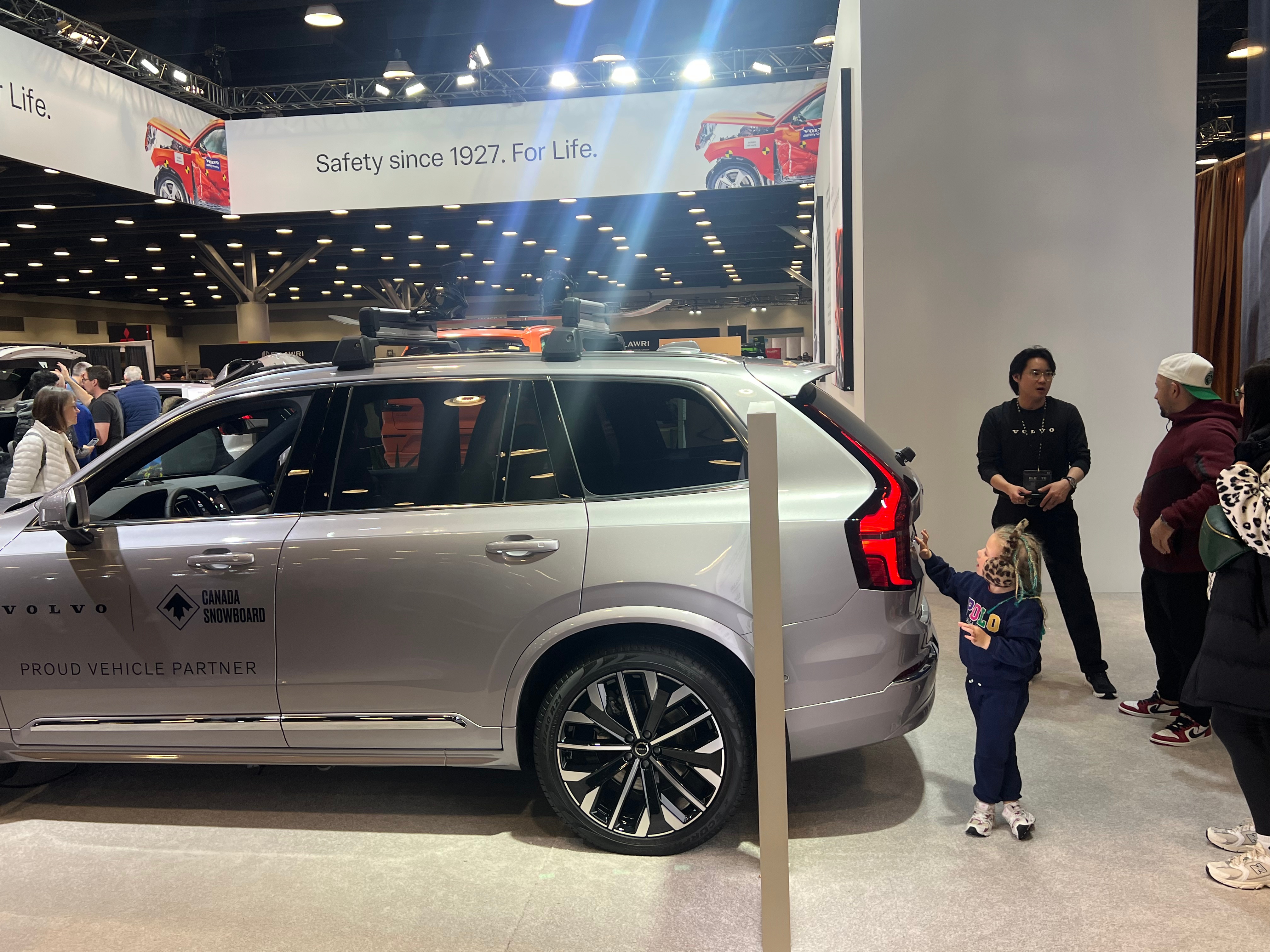
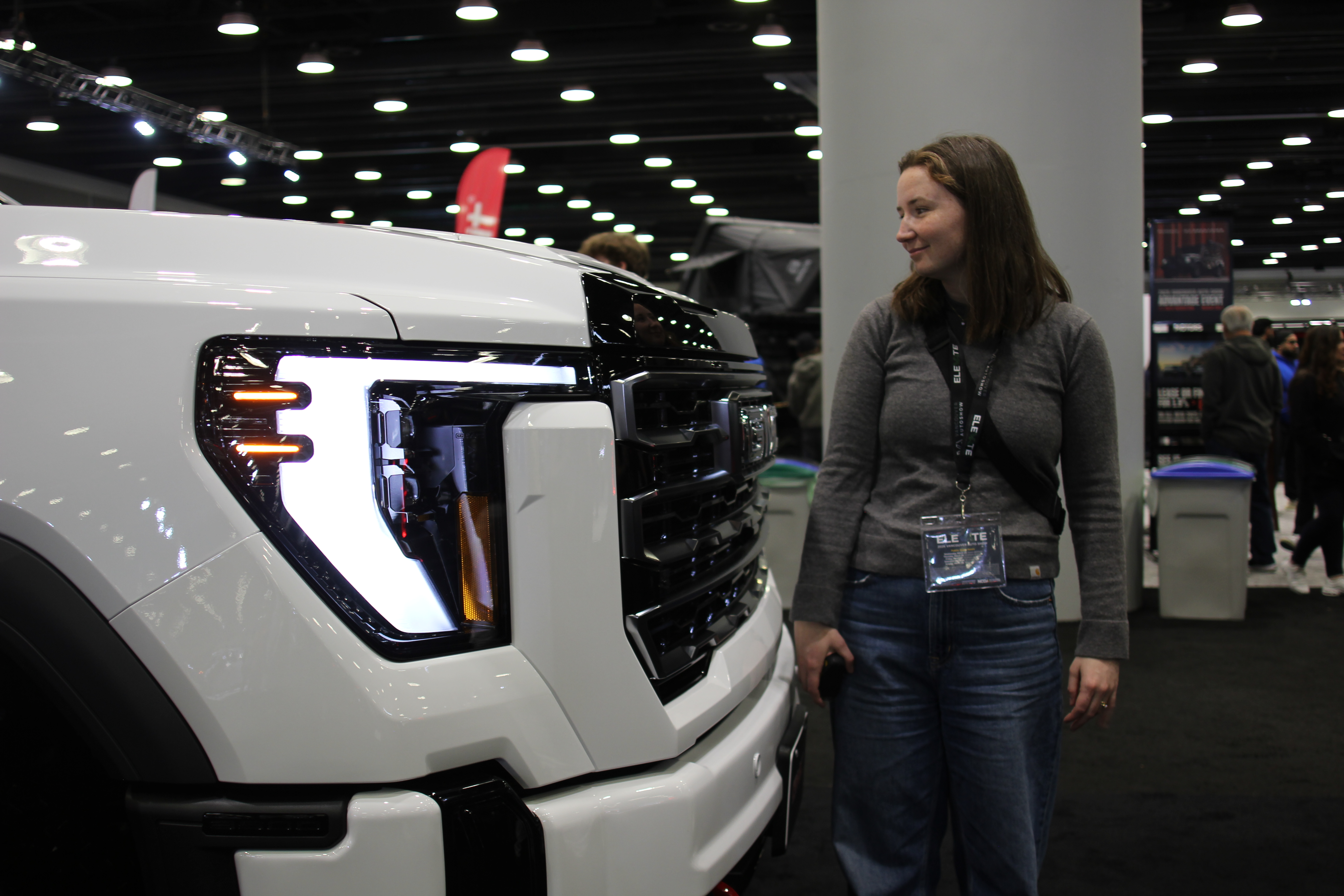
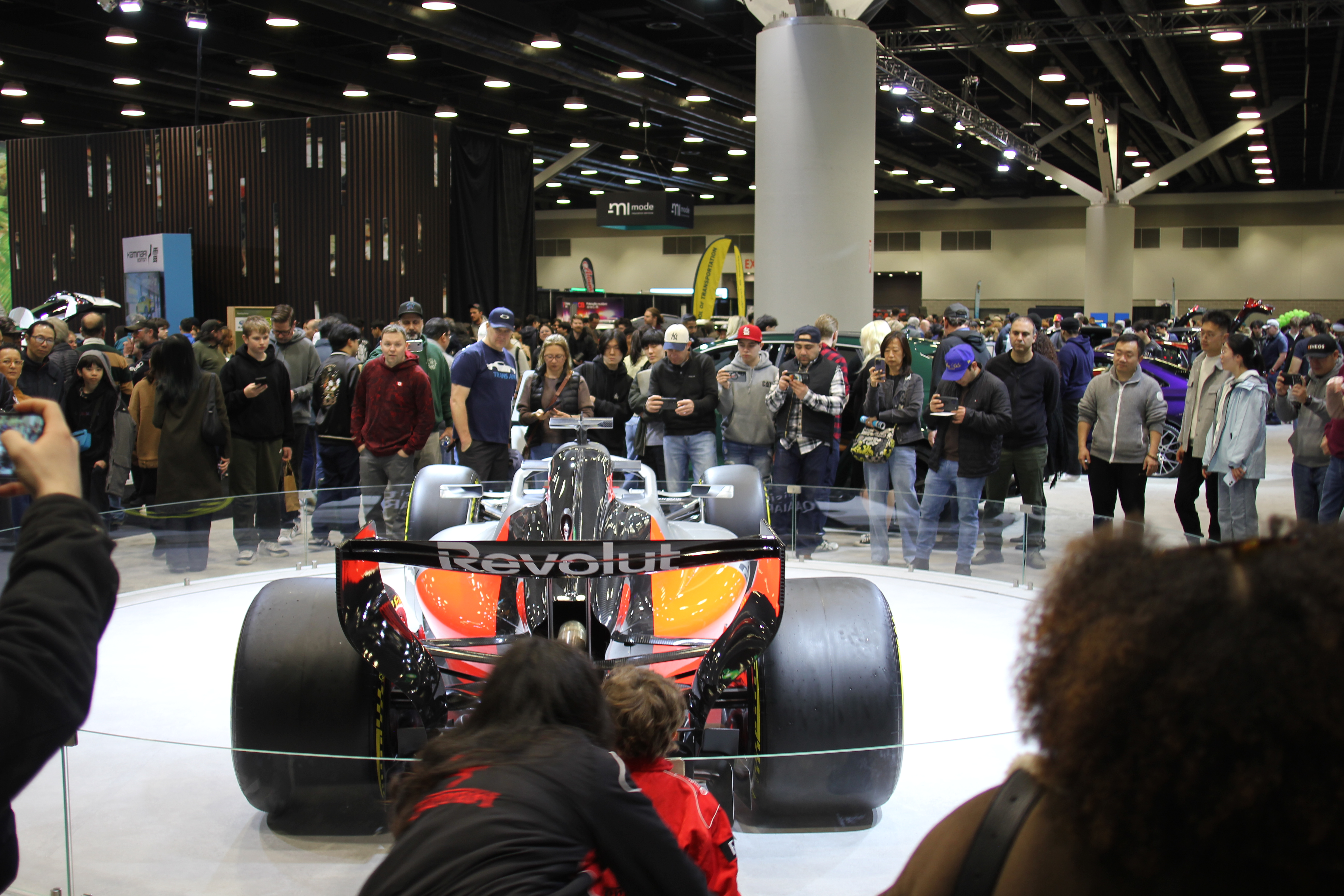
The show was a surreal experience. I’m glad I went, and especially appreciative of all the people who took the time to talk with me, even after it was abundantly clear I wasn’t there to buy a car. I can’t say I’m rushing to buy my ticket for next year yet, but when the year comes that the show features a variety of new safety innovations for people outside vehicles, I’ll be back to check them out.
References:
 Vision Zero Vancouver