
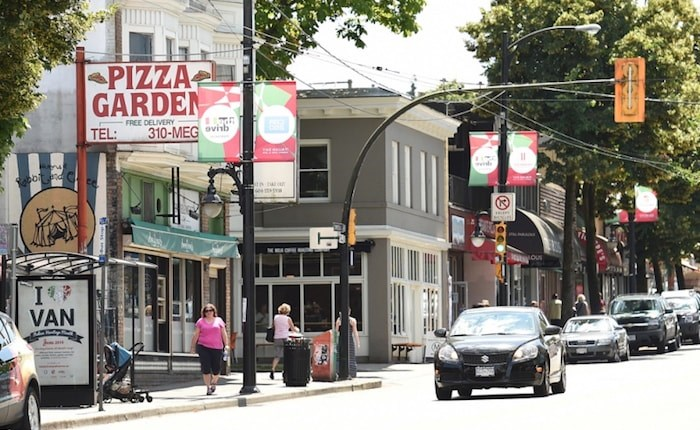
The recent Vision Zero Action Plan included an action to lower speeds on select arterials with high pedestrian and shopping volume – think streets like Denman, Robson, and Commercial Drive:
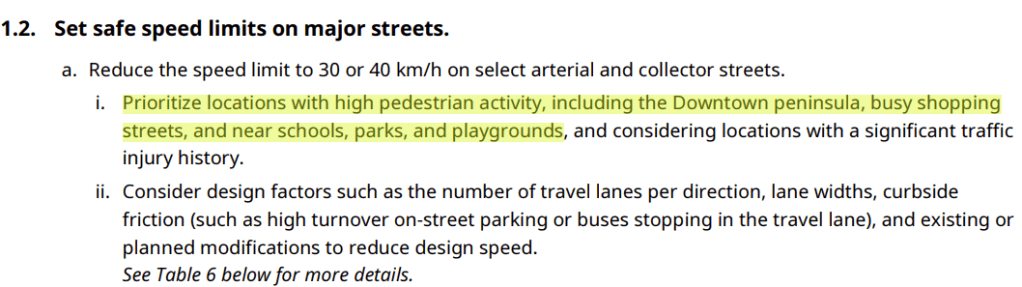
But when talking about lowering speeds, we often hear a very valid criticism: Why does it matter, if no one obeys the speed limit? Drivers will drive based on the conditions and street design.
This is absolutely true! Design is much more important than signage. Road diets, traffic calming, protected cycling infrastructure, and safer vehicles will all save more lives than simply updating signs.
But lowering speed limits is actually critical, and there’s a reason that it was the first of five key elements in the VZ Plan (and to our dismay, the one element that the ABC majority on council stripped out).
Slower speeds are safer
First let’s get the basics out of the way: lowering speed is inherently good. Slower speeds means more reaction time and a shorter braking distance, lowering the odds of a crash. And when crashes happen, they’re much less deadly. If a pedestrian is struck at 50km/h they only have a 15% chance to survive, but at 30km/h it’s 90%.
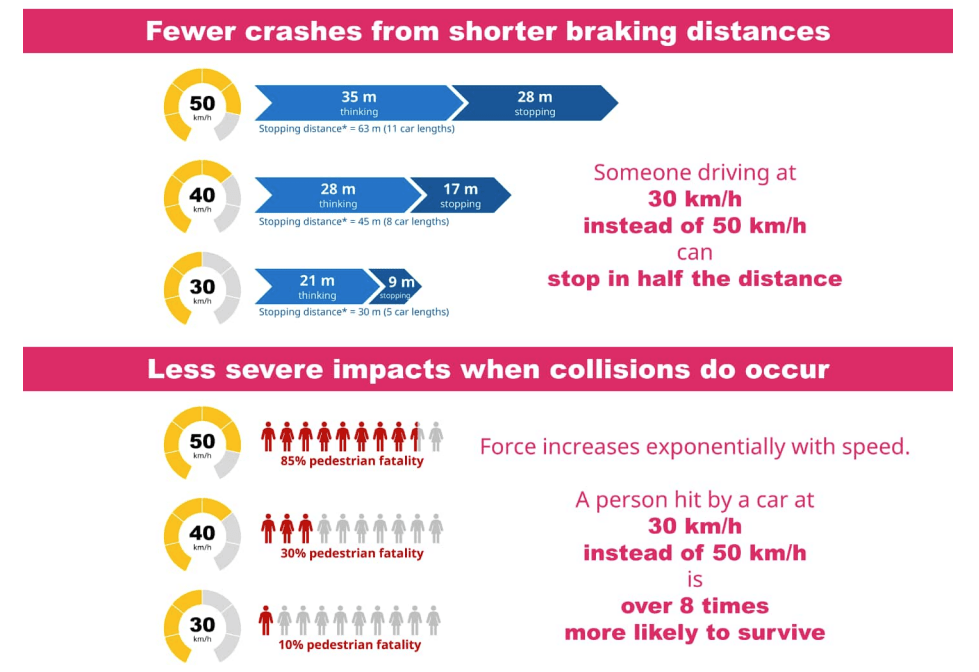
It’s clear lower speeds save lives, but how do lower speed limits help if drivers aren’t compelled to obey them? It turns out, lots of ways:
Lower limits actually work on their own – a bit
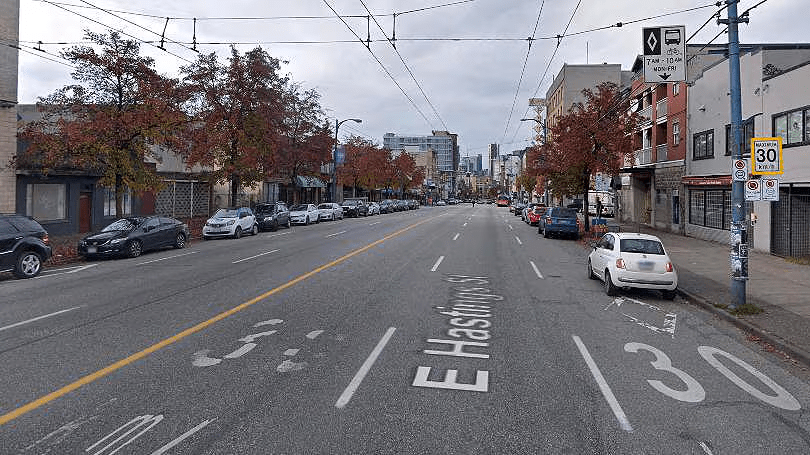
It’s not strictly true that lower speed limits have zero effect on behaviour. When the speed limit on E Hastings was lowered from 50 to 30 over a decade ago, there was a 20% reduction in average speed, and although almost everyone still drives over 30km/h, the percent of drivers going over the very-deadly speed of 50km/h dropped from 70% to 47%. Still a long way to go, but we can be pretty certain that this has saved lives over the past decade.
Unlocking road safety interventions
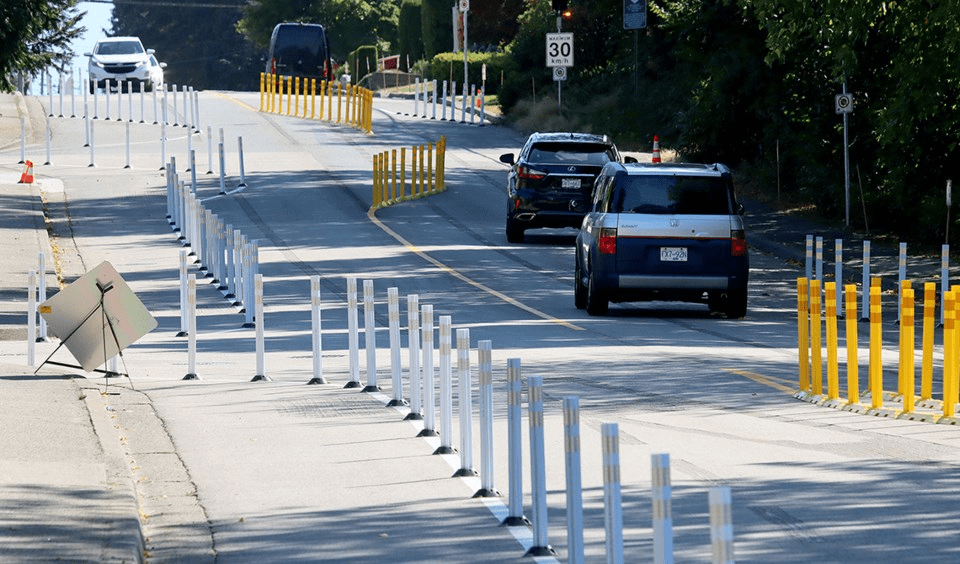
This is the most important reason of all. Traffic engineers have a mandate to design streets based on the posted limit. If the limit is 50, when they go to re-pave it or re-design it, they have to keep it “suitable” for 50 km/h travel. If it’s slower, they can introduce traffic calming designs. Think of your favourite high-pedestrian retail street – we can’t get traffic calming installed without first lowering the limits.
Indeed, this is why “Safe Speeds” was the #1 pillar in the entire VZ plan, because everything else in the plan is unlocked by reducing speed limits first. And it’s why although we’re thrilled that most of the plan passed, we’re shocked that ABC stripped this element out (without even reading it, apparently).
Enforcement
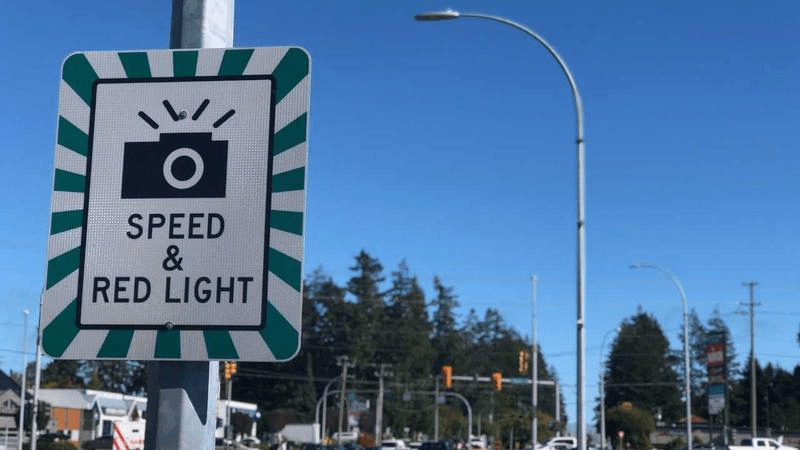
The threshold for “excessive speeding” in BC – which leads to large fines, car impoundments, and eventually driving prohibitions – is 40km/h over the limit. With a 50km/h speed limit that means 90km/h; reduce the limit to 30 and the ticket threshold drops to 70. That makes it easier to take excessive and repeat speeders off the road.
But even better is the effects of automated enforcement, a key element in the VZ Action Plan. As above, lowering the speed limit lowers the threshold for an automatic ticket. There’s ample evidence that speed cameras are very effective, and once we have more of them, we can actually enforce our posted signs.
Vehicle technology
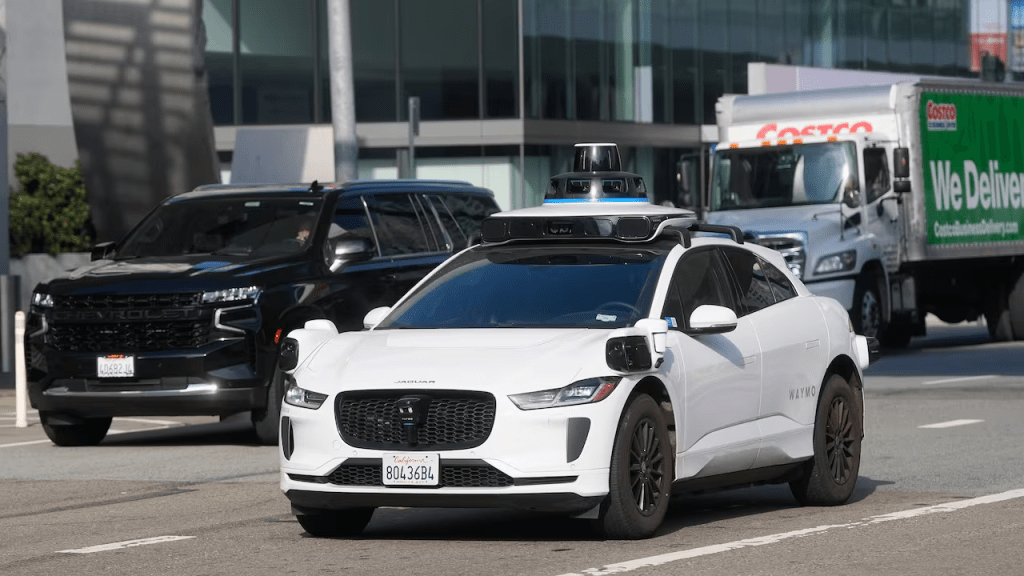
Self-driving cars are probably coming to BC one day (we have mixed feelings about this). One good thing about them is they’re programmed to follow local speed limits. Unlike human drivers, these AVs will actually obey all signs, and will help act as a bottleneck to speeds on busy arterials.
In addition, new vehicles are coming equipped with features like sensors that alert drivers when they’re going over the limit, another reminder to slow down – if the limit is actually low enough.
In conclusion
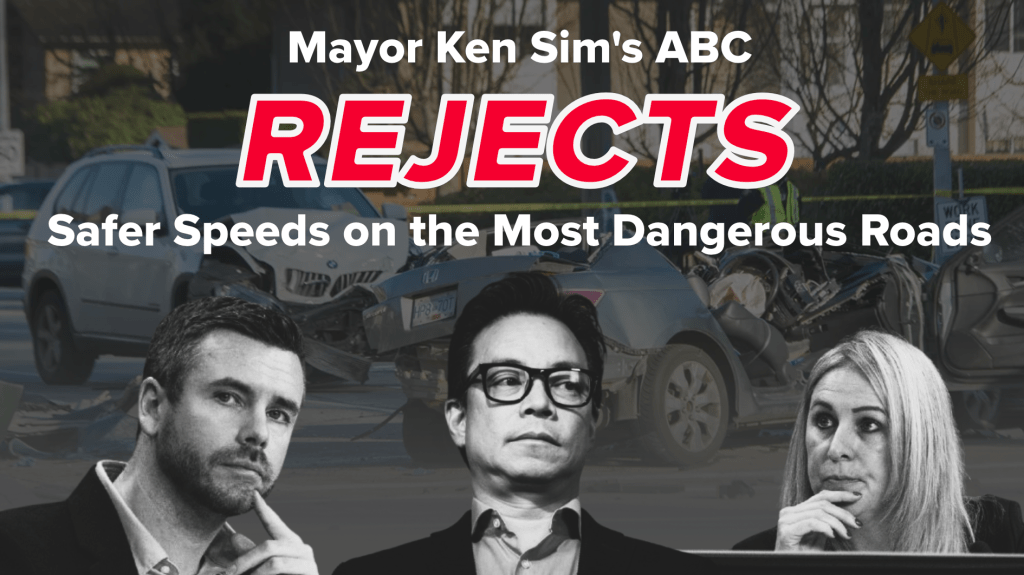
Changing speed limits is cheap, and although the effects on their own are modest, the cost-benefit ratio is excellent. It’s true that signage alone isn’t enough to get us to Vision Zero; we need to actually rebuild our most dangerous streets. But by combining proper automated enforcement with the road design interventions that lower speed limits unlock, it’s an indispensable element to eliminating road deaths on our streets. Remember who understands this and who doesn’t when it comes to vote in October.

